📦 Energy GelEDGE back in stock | 🇦🇺 Free shipping in Australia over 180 AUD
$0.00
0
Are Energy Drinks Safe to Consume?
Are energy drinks safe? For a healthy adult, within the limits the Food Standards Code sets, an occasional can is not dangerous. The more useful question, if you run, ride or train, is whether a can is the right thing to drink before a session. Most of the time it is not, and the reasons are on the label: a fixed dose of caffeine you cannot adjust, and more sugar than most people would put in a bottle on purpose.
This guide covers what Australian law allows in an energy drink, what the ingredients do, who should leave them alone, and what endurance athletes reach for instead when the 6 am start needs help.
The question is rarely "is it safe". It is "is it the right dose for what I am about to do". Photo credit: UCAN.
What is in a can, in three numbers
Up to 80 mg
of caffeine per 250 mL. The Code caps energy drinks at 320 mg per litre.
27 g
of sugar in the best-known 250 mL can sold in Australia. About seven teaspoons.
400 mg
a day from all sources is the adult guide used by Australian health authorities. Five cans is the ceiling, not a target.
Energy drinks have their own place in the Australia New Zealand Food Standards Code: Standard 2.6.4, "Formulated Caffeinated Beverages". To be sold as one, a drink must carry between 145 and 320 mg of caffeine per litre, counting every source, so the guarana in a "natural" can is counted with the rest. Anything above 320 mg per litre cannot legally be sold, made or imported.
The same standard dictates the label. Every can must say it contains caffeine, give the caffeine in milligrams per serve and per 100 mL, and state that it is not recommended for children, pregnant or lactating women, or individuals sensitive to caffeine. Where the drink also carries listed ingredients such as taurine or certain vitamins, the label must tell you not to exceed a one-day quantity.
So the typical 250 mL can is 80 mg of caffeine, close to the legal maximum, with 25 to 30 g of sugar or a sweetener blend in the sugar-free versions, plus taurine, B vitamins and, often, guarana or ginseng. The caffeine and the sugar are what you feel. The rest is the label.
Are energy drinks bad for you?
Not in the way the headlines suggest, for most adults, most of the time. The caffeine in one can is about the same as a strong café coffee. The problems start with volume and with who is drinking. Australian health authorities point to the European Food Safety Authority's figure of 400 mg of caffeine a day as the adult guide, 200 mg during pregnancy and breastfeeding, and 3 mg per kilogram of body weight for anyone under 18. Two cans and two coffees puts an adult at the line before lunch.
Above your own tolerance, caffeine does what caffeine does: restlessness, a racing heart, poor sleep that night. Anyone with a heart condition, anxiety, or who is sensitive to stimulants should talk to a GP rather than a blog. The sugar is a separate matter. Seven teaspoons in a few minutes is a lot of fast carbohydrate at once, and most of it is gone from the bloodstream well before a long run is over.
In short, an energy drink is a regulated product with a known dose. Safe within its limits. The question for anyone who trains is whether that dose matches the job.
Energy drinks before a run: the dose you cannot choose
Open a can before training and you have made four decisions at once, none of them yours. Here is how the can measures up against what a runner actually needs in the hour before a session.
What a runner needs before a session
What a 250 mL energy drink gives you
What to do instead
Carbohydrate that lasts the session
About 27 g of sugar, fast and used quickly. Nothing left for the second half of a 90-minute run.
A slow-release carbohydrate 30 to 45 minutes out. One serving of Energy Powder is 20 g of LIVSTEADY™ with 0 g of sugar.
Caffeine you can measure to your body weight
80 mg, take it or leave it. Half a can is not a plan.
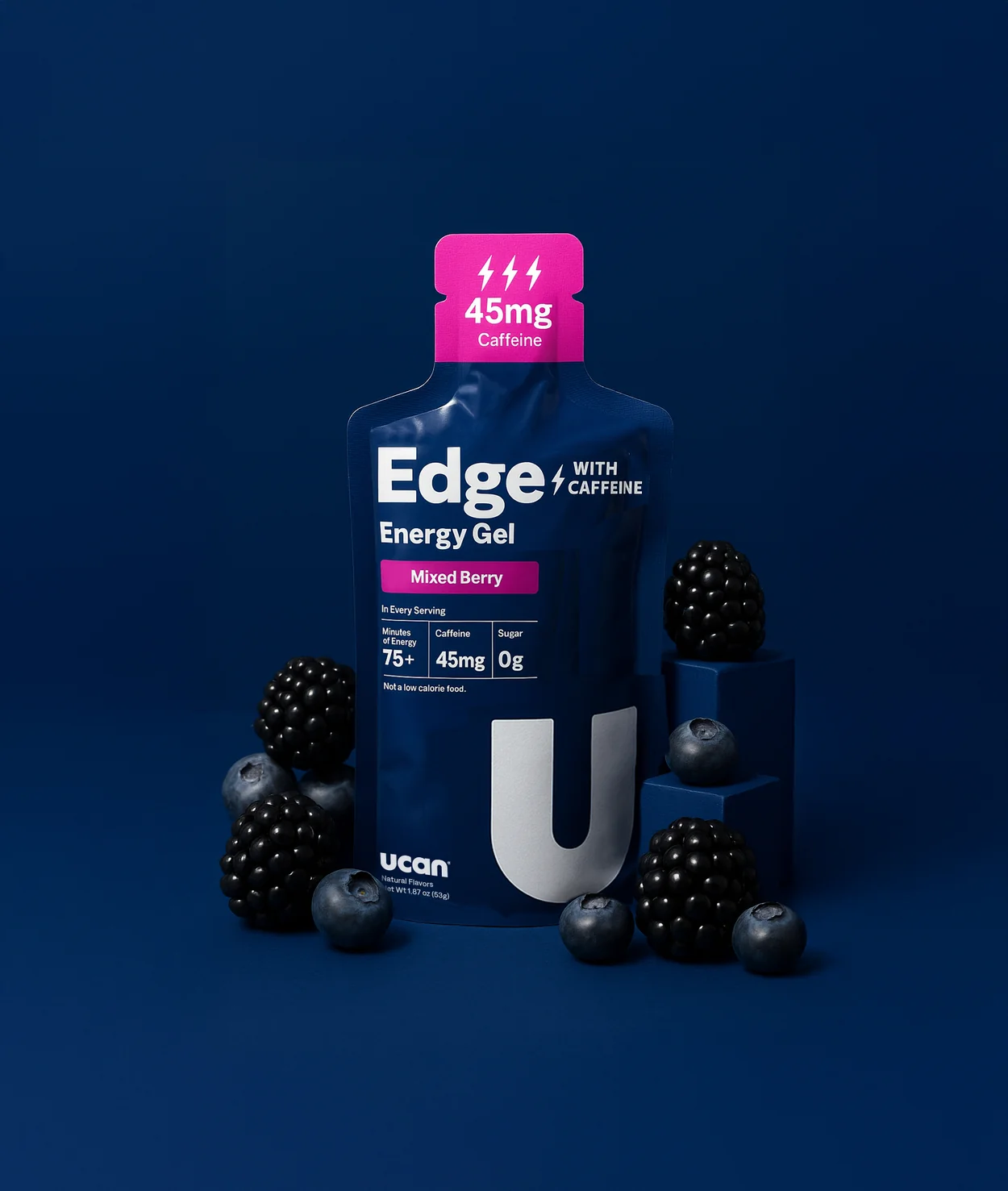
A known dose timed 30 to 60 minutes before. A caffeinated Edge gel is 45 mg (Mixed Berry, Watermelon) or 75 mg (Mocha), so two or three across a long race stays inside the 3 mg per kg guide.
Fluid and sodium on a warm morning
250 mL of sweet, carbonated liquid. Little sodium.
500 mL of water with a serving of Hydrate, 0 g sugar, electrolytes included.
Something that sits quietly at pace
Carbonation plus a sugar load, 20 minutes before you start bouncing.
Still liquid, no sugar. Test anything new on an easy run before a hard one.
Energy drink figures from the published nutrition panel of the best-known 250 mL can sold in Australia and from Standard 2.6.4. UCAN figures from the Australian pack labels.
What to drink before a run instead
Coffee, if caffeine is what you are after. It is the same stimulant without the sugar, and you control the size. A café flat white can land anywhere between about 25 and 200 mg depending on the shot, so the home machine is the more predictable option on race morning. Thirty to sixty minutes before the start is the window. The full dose-by-weight picture is in our caffeine before running guide.
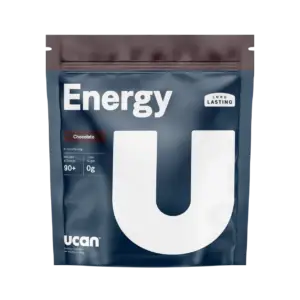
Energy Powder, if fuel is what you are after. This is the one most people mean when they say they need "energy" at 6 am. One 25 g scoop in 240 to 350 mL of water, 30 to 45 minutes before you start, gives 20 g of LIVSTEADY™, a complex carbohydrate from non-GMO corn that your body breaks down gradually, so it is still working at kilometre 12. No caffeine, 0 g sugar. Tropical Orange and Lemon mix light for warm mornings; Unflavoured disappears into anything.
A caffeinated Edge gel, if you want both in one pocket. The same LIVSTEADY™ fuel with a measured caffeine dose, 45 mg in Mixed Berry and Watermelon, 75 mg in Mocha, and no water needed. One 15 to 30 minutes before an early start, or saved for the back half of a long race.
Water and Hydrate, on the humid mornings. If the can was really about thirst, a 500 mL bottle with a serving of Hydrate does the job with 0 g of sugar and the sodium the can does not carry.
Timings follow the UCAN guidance on ucan.co. Practise any of it on a training run before a race morning.
Energy drinks at 3 pm, and at 3 km
The afternoon slump is where most cans are opened, and it is also where the can does its honest work: 80 mg of caffeine will carry you to 5 pm. Read the label, count the coffees already in you, and stay under 400 mg for the day. That is the whole safety story for a healthy adult at a desk.
At 3 km into a long run the maths changes. The sugar has already been used, the caffeine is still there, and the fizz is somewhere it should not be. If the can was your fuel, you are now running on nothing. If you want caffeine on course, take it in a form you can measure and repeat. If you want fuel, take fuel. The two jobs are different, and a can does neither of them the way a runner needs.
Sources
Australia New Zealand Food Standards Code, Standard 2.6.4, Formulated Caffeinated Beverages (caffeine limits of 145 to 320 mg per litre and mandatory label statements)
Government of Western Australia, Department of Health, "Energy drinks and caffeine" (daily intake guidance of 400 mg for adults, 200 mg in pregnancy, 3 mg per kg under 18, after the European Food Safety Authority, 2015)
Published nutrition information for the best-known 250 mL energy drink sold in Australia: 487 kJ, 27 g sugars, 80 mg caffeine per can
Desbrow et al., 2007, caffeine content of espresso coffees from Gold Coast cafés, 25 to 214 mg per serve
The UCAN Company, "How to Use UCAN: Guidance and Strategy to Get Started", ucan.co/blogs/energy-lab. UCAN product figures from Australian pack labels. Photo credit: UCAN.
Walk into any servo, supermarket or sports store in Australia and you will see two categories sitting next to each other: sports drinks and electrolyte...
Recovery Nutrition Tips for Runners Recovery nutrition for runners is key to replenishing and refueling to ensure that you have energy stores available to use...
FUELING YOUR PERSONAL BEST American Half Marathon Record Holder Emily Sisson relies on UCAN for long-lasting energy with no crash. SUSTAINED ENERGY WITHOUT GI DISTRESS...




 28Oct
 by





Comments are closed