The carbohydrate inside every UCAN product
LIVSTEADY is a slow release carbohydrate, and it works on a different clock from the maltodextrin and fructose in a standard gel. One serve keeps delivering energy for 75 minutes or more instead of twenty. You carry less, you fuel less often, and your stomach has less to deal with at 32km.
75+
Minutes of energy from one serve
0g
Sugar in EDGE, Energy Powder and Hydrate
500k+
Molecular weight in g/mol, versus a short chain sugar
3
Peer reviewed studies, published in full
LIVSTEADY is a patented slow release carbohydrate made from non-GMO corn starch. It is found only in UCAN products. Its molecules are far larger than the sugars used in conventional sports nutrition, so the body takes longer to break them down and the energy arrives gradually across 75 minutes or more from a single serve.
It contains no sugar, no caffeine and no stimulants. The same carbohydrate appears in the gels, the energy powder, the electrolyte range and the protein, at different doses for different jobs.
LIVSTEADY started in a hospital, not a lab bench in a sports nutrition company. Researchers were working on glycogen storage disease, a rare inherited condition where the body cannot access the energy it has stored. Children with it had to be fed every couple of hours, through the night, every night.
The problem was straightforward to state and very hard to solve. They needed a carbohydrate that released its energy slowly enough to carry a child through eight hours on a single serve.
That is what LIVSTEADY was built to do. In 2009 the first families slept through the night. Everything UCAN sells today runs on the same carbohydrate, at doses set for training rather than for a hospital ward.
The reason this matters to a runner is simple. Every other fuel on the shelf was designed to deliver energy quickly. This one was designed to deliver it slowly, and that constraint is where the difference comes from.
Four steps, no chemicals and no enzymes anywhere in them. What changes is the shape of the starch molecule, and that is what changes how long it takes your body to get through it.

A single plant based raw material. No sugar is added at any point in the process.

The starch is cooked slowly over a long cycle. Time and temperature do the work.

Cooking restructures the starch into a complex polysaccharide of 500,000 to 700,000 g/mol.

A larger molecule takes longer to break apart. The energy comes out gradually rather than all at once.

Slow release against fast carbohydrate
On a sugar based gel you take one roughly every 25 minutes, so a four hour marathon means eight to ten sachets in your shorts. On EDGE the interval stretches to 45 to 60 minutes. Same race, same distance, half the sachets.
| Over a four hour marathon | Maltodextrin or fructose gel | UCAN EDGE with LIVSTEADY |
|---|---|---|
| Energy from one serve | 20 to 30 minutes | 75+ minutes |
| How often you take one | Every 20 to 30 minutes | Every 45 to 60 minutes |
| Sachets you carry | 8 to 10 | 4 to 5 |
| Sugar per serve | 18 to 25g | 0g |
| Water needed to get it down | High | Low |
| Molecule size | Short chain | 500,000 to 700,000 g/mol |
| Texture | Thick, concentrated | Thin liquid |
Figures for maltodextrin and fructose gels are typical of the category rather than of any single brand. For a brand by brand breakdown, read our energy gel comparison.
The market
Nearly every sports nutrition product in the country uses one of these four approaches. Knowing which one you are holding explains most of what happens in the second half of a long session.
Most supermarket sports drinks and traditional gels. Cheap, effective and quick for short efforts.
Where it falls down: you are topping up every twenty to thirty minutes, and over four hours that is eight to ten sachets and a lot of concentrated sugar through one stomach.
The base of most modern endurance gels and powders, often blended with fructose to lift the absorption ceiling.
Where it falls down: slightly gentler than pure glucose, but still a short chain carbohydrate your body gets through quickly. The interval barely moves.
The newer 90 to 120 g per hour products. Two transporters instead of one, which is what makes those numbers possible.
Where it falls down: it needs months of gut training, and it does not suit every stomach even then. Impressive on paper, demanding in practice.
Not built to compete on grams per hour. Built to deliver steadily from one serve across 75 minutes or more.
Where it falls down: if you want a fast lift for a sprint finish, a sugar gel arrives quicker. This is a base layer, not a rescue.
Plenty of experienced athletes run two of these at once. LIVSTEADY as the base layer through the bulk of a race, then a fast carbohydrate at the specific moments they want something to arrive quickly. The two do not conflict, and knowing which one is in your hand is the point.
Concentrated sugar gels pull water into the gut to dilute themselves. That is the sloshing, and at 30km it is what sends people looking for a portaloo. LIVSTEADY sits at low osmolality, so it clears the stomach with very little water behind it.
The same thing decides an Ironman bike leg. Five or six hours of sugar concentrate is a lot to ask of a gut already working under load, and most fuelling plans that fall apart on race day fall apart there rather than in the legs.
It is also easier to swallow at pace. Thin liquid texture, no bottle needed to chase it down, no thick sachet to work through while you are breathing hard.

One EDGE pouch holds 15g of LIVSTEADY. Take it and keep running. You are not topping up before the last one has finished working.
Compare to a sugar gel. Thin liquid texture, no water needed to get it down, and less volume moving around afterwards.
EDGE, Energy Powder and Hydrate carry no sugar at all. The energy comes from the carbohydrate itself.
Four guides on what changes when you switch fuel.
Maltodextrin against LIVSTEADY, side by side over a long effort.
Read the comparison MistakesThe ten errors that cost time on race day, and the fix for each one.
Read the article In practiceThree pouches instead of nine, and how that plays out over 42 kilometres.
Read the guide Wider viewHow carbohydrate, protein and hydration fit together across a training week.
Read the guideStraight answers
Most of the confusion comes from people filing it under a category it does not belong to.
No sucrose, no fructose, no dextrose, no added sugar of any kind.
Maltodextrin is a short chain carbohydrate the body gets through quickly. LIVSTEADY is a much larger molecule.
It is a usable energy source, not a bulking agent, and its fibre content is low.
No caffeine in LIVSTEADY itself. Only one EDGE flavour carries added caffeine.
It is a carbohydrate. Energy + Protein combines the two, but they are separate ingredients.
It is a formulated supplementary sports food and sits alongside a normal diet, not instead of one.
How to take it
The protocol does not change with the athlete. What changes is the interval, and that depends on how hard you are working rather than how fast you are.
| Session | 30 to 45 min before | During | After |
|---|---|---|---|
| Easy run under an hour | 1 serve Energy Powder or 1 EDGE gel | Nothing needed | 1 serve Energy + Protein |
| Tempo or threshold | 1 serve Energy Powder or 1 EDGE gel | 1 EDGE gel every 45 min | 1 serve Energy + Protein |
| Long run or marathon | 1 serve Energy Powder or 1 EDGE gel | 1 EDGE gel every 60 min | 1 serve Energy + Protein |
| Long ride | 1 serve Energy Powder or 1 EDGE gel | 1 EDGE gel every 60 min | 1 serve Energy + Protein |
| Bike intervals | 1 serve Energy Powder or 1 EDGE gel | 1 EDGE gel every 45 min | 1 serve Energy + Protein |
| Open water swim | 1 serve, 30 to 45 min before the start | 1 EDGE gel on the start line if the swim is over 80 min | 1 serve Energy + Protein |
Run Hydrate alongside all of it if you sweat heavily or the day is warm. Test the protocol on two long sessions before you race it. Nobody should meet a new fuel for the first time on a start line.
The evidence
Journal, year, method and sample size for each one, including who funded what. The full papers are published rather than summarised.
Ten highly trained cyclists took either LIVSTEADY or maltodextrin, with blood and expired gas samples collected before, during and after exercise. This was the first trial on LIVSTEADY in athletes.
A single 50g serve taken before a three hour run, with no further intake across the session. The researchers reported virtually no gastrointestinal symptoms in the LIVSTEADY group.
LIVSTEADY compared against dextrose before kick off and again at half time across a simulated match. The decline in skill execution normally seen in the second half was reduced.
The range
Same carbohydrate, four jobs. Most runners start with a box of EDGE and add the powder once they trust it.


15g of LIVSTEADY per pouch. This is what you carry on course.
Shop gels →
The pre session base layer. Mix cold, drink 30 minutes out.
Shop powder →
Five electrolytes, zero sugar. Runs alongside your fuel.
Shop electrolytes →
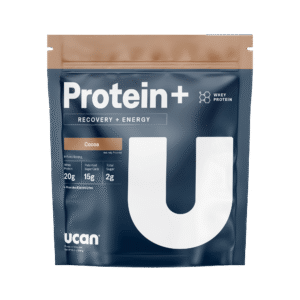
LIVSTEADY plus protein, for the hour after you stop.
Shop protein →If you don’t find your answer here, contact us
A carbohydrate built from large, complex molecules that the body takes longer to break down. Instead of arriving all at once, the energy is released gradually. LIVSTEADY sits at 500,000 to 700,000 g/mol, which is why one serve keeps working for 75 minutes or more.
No. EDGE, Energy Powder and Hydrate all carry zero sugar. Check the nutrition information panel on each product page for the full declaration against the Australian pack.
Molecule size and release rate. Maltodextrin is a short chain carbohydrate the body gets through quickly, which is why a standard gel covers 20 to 30 minutes. LIVSTEADY is a far larger molecule, so a single pouch covers 75 minutes or more.
Most athletes find it easier than a sugar gel because it needs very little water to clear the stomach. In a three hour treadmill study the researchers reported virtually no gastrointestinal symptoms. Everybody’s gut is different, so run it on two long sessions before you take it into a race.
EDGE is a formulated supplementary sports food with no banned substances in the formula. It does not carry Informed Sport or HASTA certification. If you compete under a testing programme, check the current batch with your federation before you race it.
One serve of Energy Powder 30 to 45 minutes before the start, then one EDGE pouch roughly every 60 minutes. A four hour marathon takes four gels on course. Add Hydrate through the race if you sweat heavily or the day is warm.
Yes. Energy Powder is often used before a morning session or as a mid afternoon serve. It carries no caffeine and no stimulants, so it does not interfere with sleep.
LIVSTEADY is made from non-GMO corn starch, so the carbohydrate itself is plant based. Individual products differ, particularly across the protein range, so check the ingredient list on the product page for the item you are buying.
Generation UCAN Australia is the official Australian reseller. Stock is held in Dandenong South, Victoria and ships domestically, with free shipping on orders over $220. No six week wait from the United States.
This food is a formulated supplementary sports food and is not a sole source of nutrition. It should be used in conjunction with an appropriate physical training or exercise programme and consumed in conjunction with a nutritious diet. Not suitable for children under 15 years of age or pregnant women.