📦 Energy Gel EDGE Watermelon + Caffeine back in stock | 🇦🇺 Free shipping in Australia over 220 AUD
$0.00
0
Common mistakes runners make with their nutrition and how to avoid them
Most running nutrition mistakes are not exotic. They are the same ten errors, made by experienced runners as often as beginners, and each one costs you minutes rather than seconds. Here they are, with the specific fix for each.
None of this requires a dietitian or a lab. It requires doing the arithmetic once and then rehearsing it on your long runs.
If you only fix three
Start fuelling at 30 to 45 minutes rather than when you feel empty. Work out your hourly carbohydrate number instead of guessing it. Practise at that number on long runs, not below it. Those three account for most of the damage.
1. Waiting until you feel empty before the first gel
What goes wrong. You feel fine at 40 minutes, so you skip the first gel. By the time you notice you need one, you are already behind, and carbohydrate takes five to fifteen minutes to arrive. You spend the rest of the race chasing a deficit you cannot close.
The fix. Take the first serve at 30 to 45 minutes, whether you feel like it or not, then hold the interval. Set a recurring alert on your watch by time, not distance. At 4:00 pace a gel every 45 minutes lands around 11km. At 6:00 pace it lands around 7.5km. Distance markers will drift, a timer will not.
2. Guessing your hourly carbohydrate number
What goes wrong. Most runners carry the number of gels that fit in their belt, rather than the number their race requires. Then they run out at 32km or bring three home unused.
The fix. Current guidance for marathon running sits at 60 to 90 g of carbohydrate per hour, with well trained athletes on high carb protocols pushing towards 120 g. Pick your target, then divide by what your gel carries.
Hourly target
On a 19 g gel
On a 30 g gel
60 g
3 per hour
2 per hour
75 g
4 per hour
2 to 3 per hour
90 g
5 per hour, plus a carbohydrate drink
3 per hour
A four hour marathon at 60 g per hour is 240 g in total. Count the sachets before you leave the house, then carry one spare. The full working is in our guide to energy gels for marathon running.
3. Never practising at race intake
What goes wrong. You train on one gel per long run, then take four per hour on race day. Your gut has never seen that volume and it objects, usually somewhere around 28km.
The fix. Gut tolerance is trainable. Most runners who report stomach trouble have simply never rehearsed at race intake. Take your full hourly target on at least three long runs in the build, and treat each one as a dress rehearsal for flavour, texture and logistics as much as for pace.
4. Under fuelling the easy days
What goes wrong. Runners fuel the sessions that feel hard and skip food around the ones that feel easy. Over a training block that adds up, and the first thing to go is the quality of the hard sessions, not the easy ones.
The fix. Eat around every run, including the easy ones. If a morning run happens before breakfast, a serve of UCAN Energy Powder mixed cold 30 to 45 minutes out covers it without sitting heavy. If any of this raises questions about your own intake, a sports dietitian is the right person to ask.
5. Treating every electrolyte product as interchangeable
What goes wrong. The word electrolyte on the front of a pack tells you nothing. Sodium per litre across the category runs from around 400 mg in a supermarket sports drink to 2,000 mg in a salt forward mix. Buy the wrong end of that range for your sweat rate and you either cramp or you cannot drink it.
The fix. Convert sodium to a per litre figure so you can compare brands with different serve sizes, then check whether magnesium and calcium are in the formula at all. The thirty second version is in our guide to choosing an electrolyte drink.
6. Not counting the sodium already in your gels
What goes wrong. You set an hourly sodium target from a sweat test, then meet it with your drink alone, forgetting the gels are contributing too. Or the reverse: you assume your gels have sodium in them and they carry 10 mg.
The fix. Add it up. Sodium across gels ranges from 10 mg to 200 mg per sachet, a twenty fold difference that is rarely on the front of the packet. Work out your own number first with the sweat rate test in our hydration guide, then build the total from everything you are carrying.
7. Taking a thick gel without water
What goes wrong. A concentrated sugar gel taken dry has to be diluted before your body can absorb any of it, so it pulls fluid into your gut. That is the sloshing, the bloating and the cramping, and it usually shows up twenty minutes after the gel rather than immediately.
The fix. Unless you are on an isotonic or a slow release gel that is formulated to go down dry, take it just before a water station. Two or three good mouthfuls is enough. If you keep having this problem, the format is the issue rather than your technique, and a sugar free gel removes the variable entirely.
8. Stacking caffeine without counting it
What goes wrong. Coffee before the start, four caffeinated gels through the race, and a cola at an aid station. You are past 350 mg without having planned a single milligram of it, and the last hour feels jittery rather than sharp.
The fix. The evidence based range is 3 to 6 mg per kilogram of body weight for the whole day, coffee included. For a 70 kg runner that is 210 to 420 mg. Subtract your coffee first, then work out how many caffeinated gels fit in what is left. The arithmetic is worked through in our caffeine gel guide.
9. Trying something new on race day
What goes wrong. The expo hands out samples, a friend recommends a brand, the aid station carries something you have never used. All of it is a gamble taken at the one moment you cannot afford to lose.
The fix. Carry your own. Course nutrition is a brand you may not have trained with, handed to you at a pace you did not choose. Buy single sachets and test flavours in your build rather than on the start line. A flavour you enjoy at 5km can turn your stomach at 35km, so carry one fruity and one neutral.
10. Skipping the hour after you stop
What goes wrong. You finish, you stretch, you drive home, and you eat two hours later. The next session is compromised before you start it, and on a heavy training week that compounds across days rather than showing up on one.
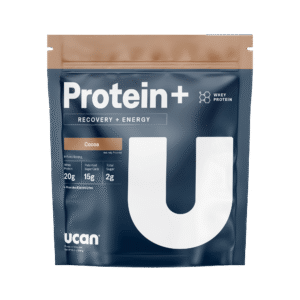
The fix. Carbohydrate and protein within the hour after you stop. UCAN Energy + Protein does both in one serve and travels in a bag, which matters more than the formula because the mistake is almost always logistics rather than knowledge.
Every mistake on this list comes from making a decision on the run rather than before it. A plan you have rehearsed twelve times becomes the one predictable thing on a chaotic race morning, and it frees your attention for pacing.
Write it down: what you take before the start, the interval on your watch, how many sachets, where they sit, and what goes in within the hour after. Then run it on two long sessions before you race it.
Frequently asked questions
What is the most common running nutrition mistake?
Starting to fuel too late. Runners wait until they feel tired, or until the 90 minute mark, before taking anything. Carbohydrate takes five to fifteen minutes to arrive, so by then you are already behind and you will not catch up. Start at 30 to 45 minutes and hold the interval.
How much carbohydrate should a runner take per hour?
Current guidance for marathon running is 60 to 90 g per hour, with well trained athletes on high carb protocols pushing towards 120 g. The old 30 to 60 g figure still circulating online predates multiple transportable carbohydrate blends. Pick a target, divide by what your gel carries, and practise at that number in training.
Why do I get stomach trouble on long runs?
Usually one of three things. You are taking concentrated sugar gels without enough water, you are taking more than your gut has practised, or you are taking something you have never trained with. Work through them in that order. Gut tolerance is trainable, but only if you practise at race intake rather than below it.
Do I need electrolytes for a run under an hour?
In cool conditions, water is enough. In heat or high humidity, one serve is worth having, particularly if you sweat heavily or finish runs with salt marks on your cap. The deciding factor is your own sweat rate rather than the distance.
Should I take a gel before the start of a race?
Yes. One serve 30 to 45 minutes before the gun gives you circulating fuel so you are not drawing down on stored energy from the first kilometre. Your carb loading over the previous two to three days set the stores. The pre race serve protects them.
Can I fix a nutrition mistake mid race?
Partly. If you started late you can take a serve and hold the interval from there, and you will recover some of it. Cramping is the one you cannot fix on the run, which is why the sodium has to be planned in from the start rather than reached for once it happens.
Guidance here is general and not individual advice. Carbohydrate tolerance, sweat rate and sweat sodium concentration vary widely between individuals. Test any change to your fuelling in training before you race it. If you have specific concerns about your intake or your training load, speak to a sports dietitian.
The kit that fixes most of them
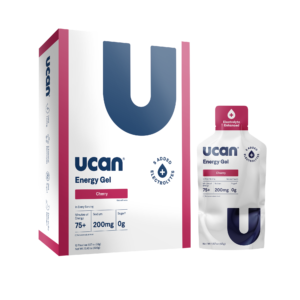
Four products, and which mistakes on this list each one solves.
Sports Dietitian Bob Seebohar was the personal sports dietitian for the 2008 U.S. Olympic Triathlon team and takes a cutting-edge approach to nutrition with his Metabolic Efficiency
The combination of white, pink blast, total orange and bright crimson will mark Nike's presence in Tokyo across select performance and lifestyle products.
We’re all familiar with the afternoon slump. You’re going about your day, feeling fine, but then 2 p.m. hits—and instead of thinking about a pre-dinner workout, you’re suddenly thinking about a pre-dinner nap.
Best Caffeine Gel for Endurance: How Caffeine Fuels Performance For most endurance athletes, caffeine is part of the ritual. A coffee before a morning run,...
by Sarah UCAN AUS Team1531Comments Off on Best Caffeine Gel for Endurance: How Caffeine Fuels Performance
There are four completely different kinds of product sitting under the words electrolyte drink, and they are not interchangeable. The best electrolyte drink in Australia...




 by Sarah UCAN AUS Team
170
Comments Off on How Sara Hall Takes Her Training to the Next Level with UCAN
by Sarah UCAN AUS Team
170
Comments Off on How Sara Hall Takes Her Training to the Next Level with UCAN 


Comments are closed