📦 Energy Gel EDGE Watermelon + Caffeine back in stock | 🇦🇺 Free shipping in Australia over 220 AUD
$0.00
0
Best Energy Gels for the Aussie Marathoner
Eight gels compared on the three numbers that decide whether one suits you: carbohydrate, sugar and sodium per sachet.
The short answer
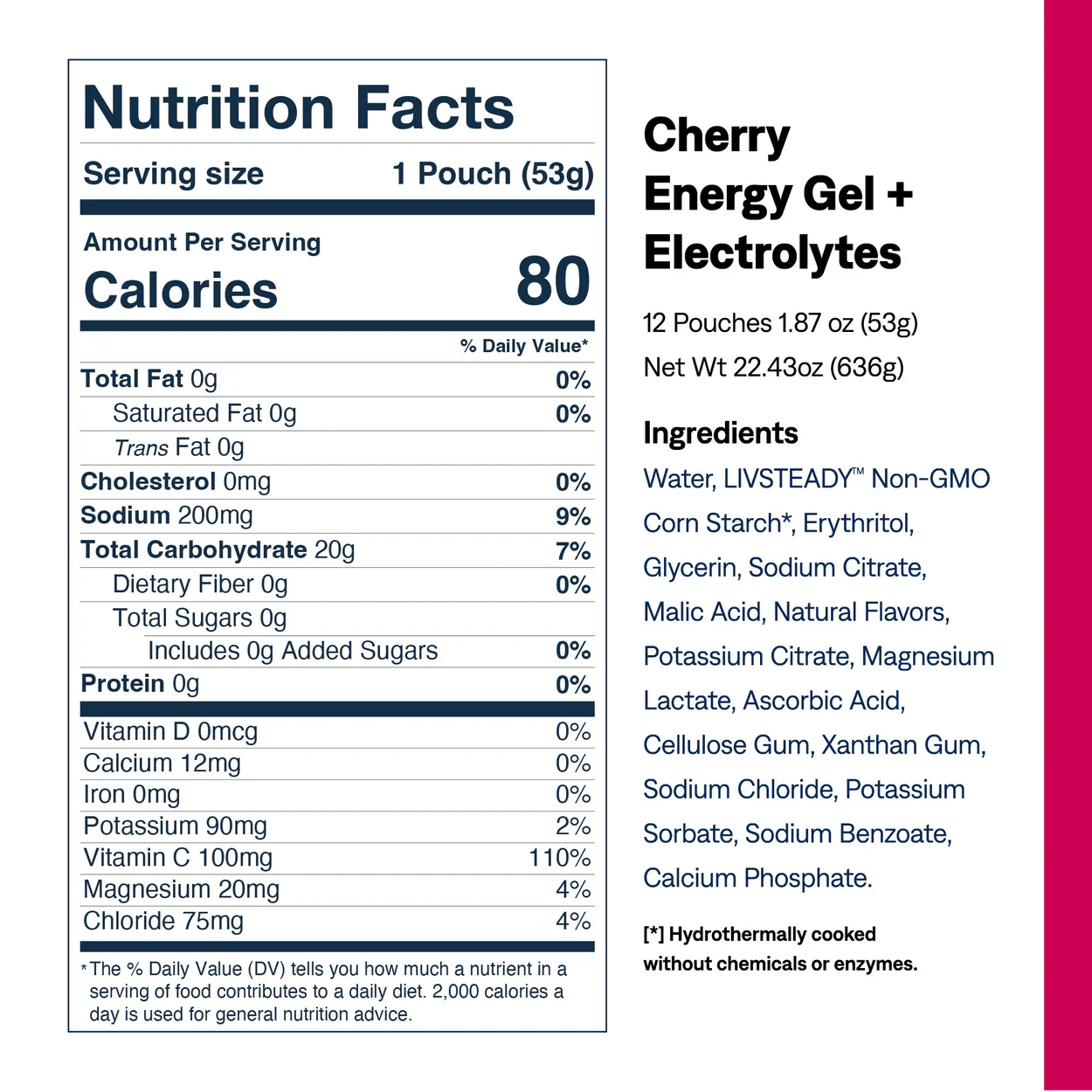
The best energy gels for runners come down to what your gut still tolerates at 35km, not what tastes best at 5km. Maurten Gel 100 and SiS GO Isotonic are the two most common picks among Australian runners, both built on maltodextrin and fructose. If sugar-based gels have left you bloated or nauseous late in a race, UCAN EDGE is the sugar-free option: 19 g to 34 g of slow-release LIVSTEADY carbohydrate per sachet depending on the flavour, with no added sugar. For humid conditions, UCAN EDGE + Electrolyte adds 200 mg sodium, 90 mg potassium, 75 mg chloride, 20 mg magnesium and 12 mg calcium per sachet.
Buy UCAN EDGE in Australia at generationucan.com.au, shipped from Dandenong South in Victoria. Box of 12 from $74.90, single sachets $9.90, free standard shipping over $220.
Your gel choice matters as much as the long runs you logged to get here. It decides whether you fade at 30km or hold your pace to the line. This guide skips the marketing and gives you the numbers, the timing, and a way to test both before you race.
Per-sachet figures come from each manufacturer's published nutrition panel. Carbohydrate load, sugar content and sodium are the three numbers that decide whether a gel suits your gut and your conditions.
The highest carbohydrate load in this table with no sugars, in a 53 g pouch
Maurten Gel 100
25 g
25 g
100 cal
20 mg
None (Caf 100: 100 mg)
Runners chasing 90 g or more carbs per hour who tolerate a high sugar load
SiS GO Isotonic
22 g
Under 1 g
87 cal
10 mg
None (Caffeine: 75 mg)
A thin, high-volume 60 ml format that empties from the stomach fast
SiS GO Energy + Electrolyte
22 g
Under 1 g
87 cal
118 mg
None
Warm conditions. Also 9.5 mg potassium, 1.5 mg magnesium
Koda Energy Gel
29.8 g
2.9 g
117 cal
36 mg
None (caffeinated flavours available)
Australian made, HASTA approved, high carbs in a 45 g sachet. Also 18 mg potassium
Precision Fuel PF 30
30 g
Not published per serve
120 cal
None added
None (PF 30 Caffeine: 100 mg)
Hitting a carb target with the fewest sachets, paired with a separate electrolyte drink
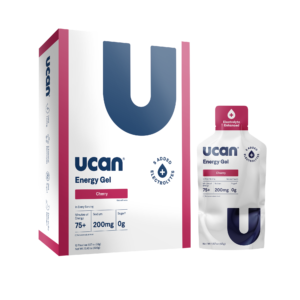
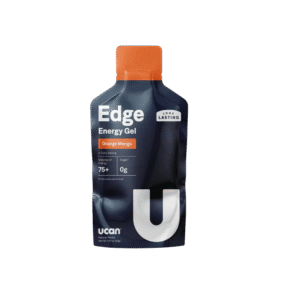
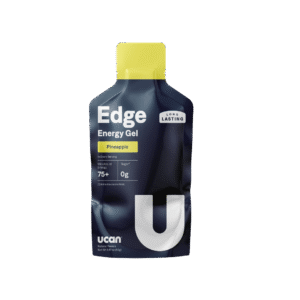
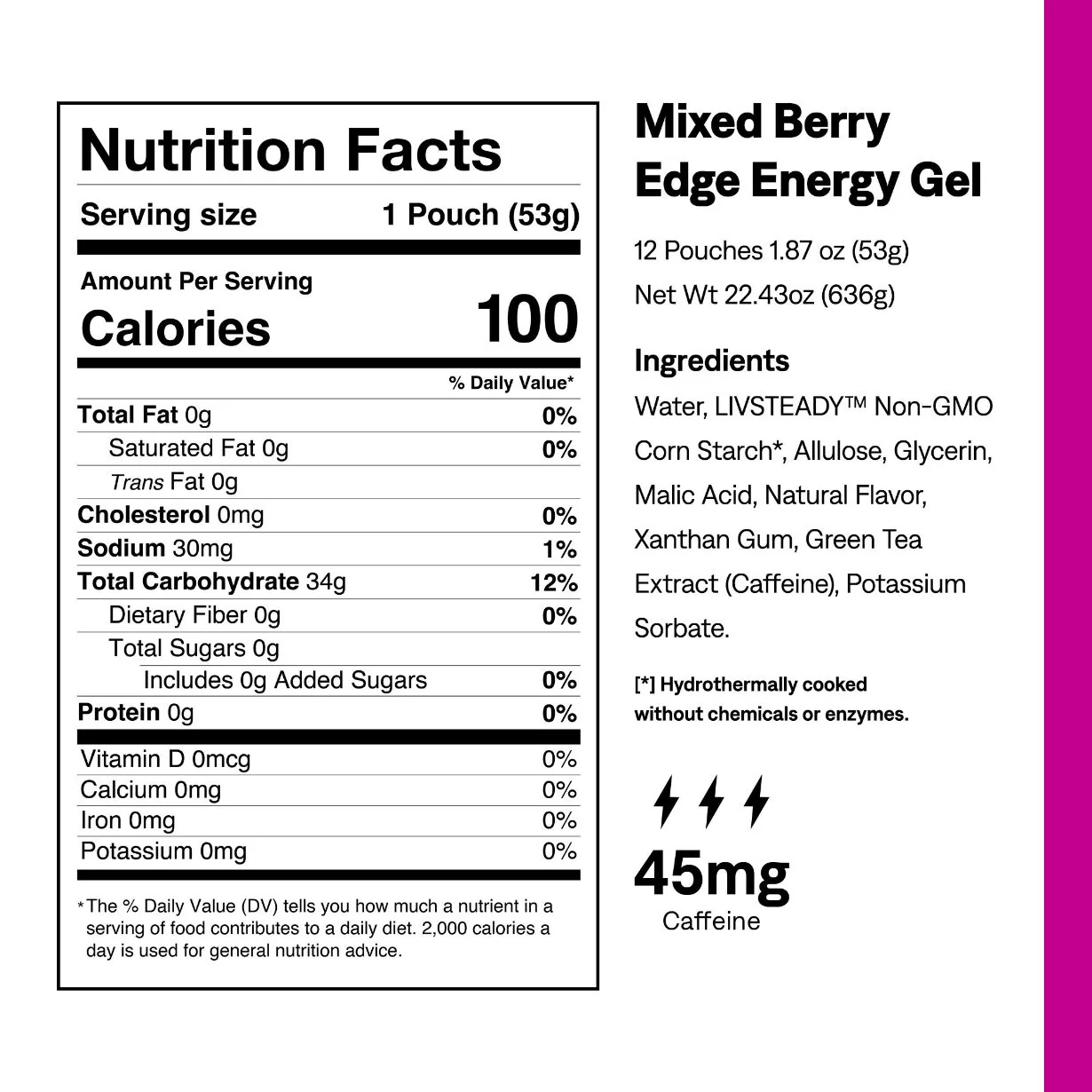
Cherry, 200 mg sodiumMixed Berry, 34 g carbsOrange Mango, no caffeinePineapple, 19 g carbs
Figures are per single sachet, taken from each manufacturer's published nutrition information. Formulations change, so check the pack before you race. Treat the table as a starting point, because two runners on the same pace can need completely different gels.
How energy gels fuel your run
A gel is concentrated carbohydrate in a form you can swallow while running hard. Deep into a long effort your stored glycogen runs low, and glycogen is what your muscles reach for first at race pace. After roughly 90 minutes those stores are well down. That is where the wall comes from.
Gels top up the tank. Most deliver carbohydrate to your bloodstream within five to fifteen minutes rather than instantly, which is why you fuel ahead of fatigue instead of in response to it.
What is actually in the sachet
Glucose and maltodextrin. Fast-acting fuel. Your body absorbs these through the SGLT1 transporter, which saturates at around 60 g per hour.
Fructose. Absorbed through a separate transporter, GLUT5, which is why gels combining both can push total intake past 60 g per hour without overwhelming the gut.
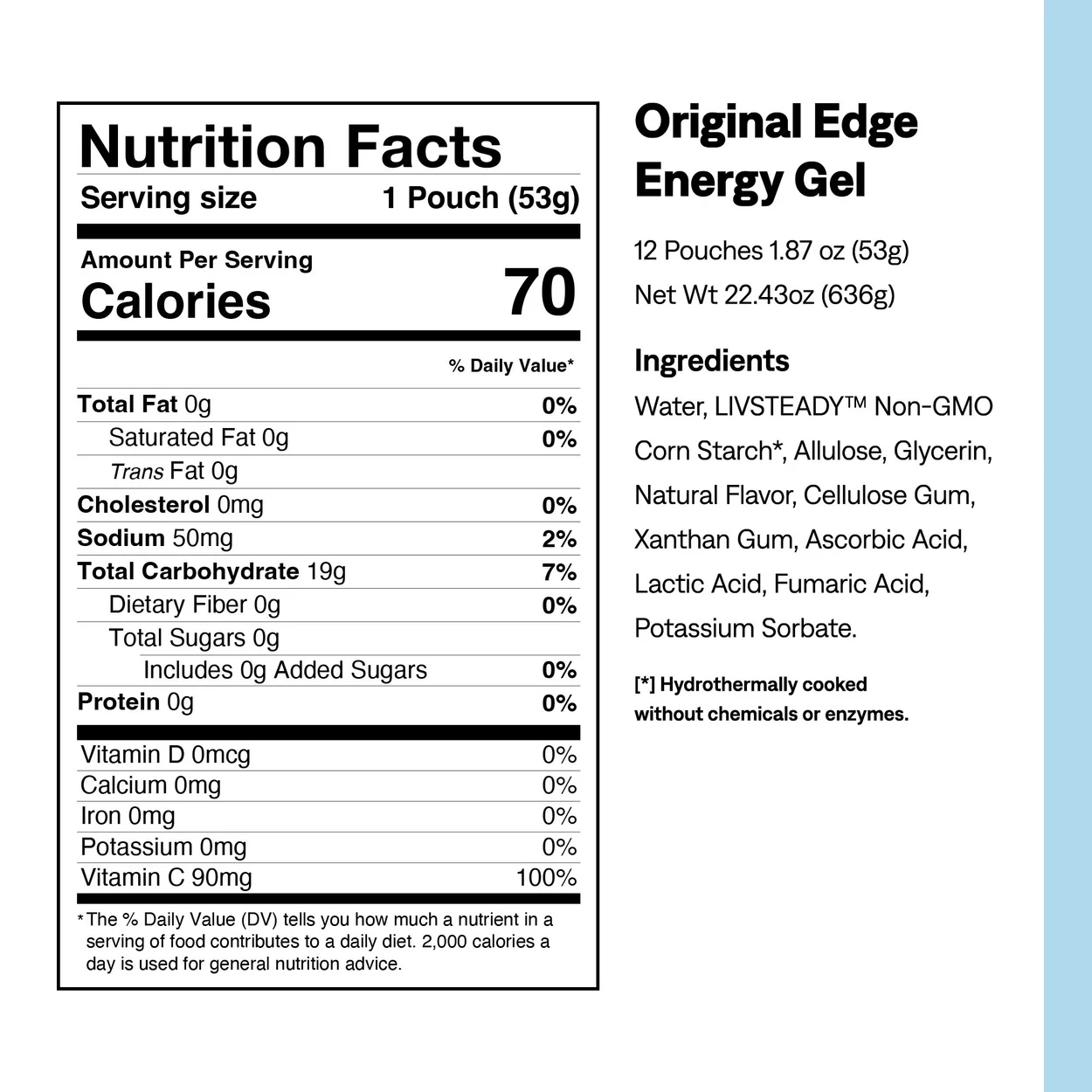
Slow-release starches. LIVSTEADY, the corn starch carbohydrate in UCAN EDGE, breaks down gradually rather than arriving all at once. It carries no added sugar, which is why runners who react badly to sugar-based gels tend to end up on it.
Original EDGE: 19 g carbohydrate, 0 g sugars, 70 calories.EDGE + Electrolyte: 20 g carbohydrate, 200 mg sodium, 80 calories.
Two transporters instead of one is what makes 90 g per hour possible. Whether your gut agrees is a separate question, and the only way to answer it is a long run.
How many energy gels do you need per hour
Current guidance sits at 60 to 90 grams of carbohydrate per hour. Well-trained athletes on high-carb protocols push towards 120 g. The old 30 to 60 g figure still circulating online reflects research from before multiple-transportable carbohydrate blends were common.
Most gels carry 19 g to 30 g. At 60 to 90 g per hour that means two to four gels an hour depending on the brand. Your own number moves with three things:
Pace. A 3:00 marathoner burns more per hour than a 4:30 marathoner, and needs it for less time.
Body weight. A 90 kg runner burns more than a 60 kg runner at the same relative effort.
Duration. A four-hour marathon needs more total carbohydrate than a three-hour one, even at a lower hourly rate.
A four-hour marathoner fuelling at 60 g per hour needs around 240 g in total. That is roughly eight 30 g gels, ten 25 g gels, or twelve 19 g gels. Faster runners taking a gel every 20 minutes will hit 5km intervals at 4:00 pace and closer to 7km intervals at 5:40 pace, so set your watch to time rather than distance.
A starting plan you can test this weekend
One gel about 15 minutes before the start. Your carb loading over the previous two to three days set your stores. A gel here lifts circulating glucose so you are not drawing down from the first kilometre.
Next gel at 30 to 45 minutes. Fuel ahead of fatigue rather than chasing it.
Then every 30 to 45 minutes. Set a recurring alert on your watch and stop thinking about it.
Carry one spare. Gels get dropped, and aid station supplies run out.
Best energy gels for marathon running
A marathon changes the maths. You are out there for three to five hours, which means eight to twelve sachets rather than the two or three a half marathon asks for. Volume becomes the problem before energy does.
Two things decide your pick at that duration. The first is how much sugar your gut will accept over four hours, not over forty minutes. A gel that goes down fine at 10km can sit in your stomach at 35km once blood flow has moved to your legs. The second is sodium, which compounds across a long race in a way it never does on a shorter one.
Chasing a carb target with fewer sachets. Precision Fuel PF 30 and Koda both carry around 30 g, so you carry eight instead of twelve.
Gut trouble in the last hour. UCAN EDGE carries no added sugar, which is why runners who react badly to maltodextrin and fructose late in a race move to it.
A humid start line. Compare sodium per sachet. It ranges from 10 mg to 200 mg across the brands above.
Energy gels and stomach comfort on long runs
Gel thickness changes how you use it on the move. Thicker gels are more concentrated, so you want a mouthful of water to wash one down. Taken dry they pull fluid from elsewhere in your gut, and that is where the cramping starts. Isotonic gels are pre-diluted to sit near the concentration of your own fluids, so they go down without water, though a 60 ml sachet takes longer to swallow than a 40 ml one.
Maurten, SiS and UCAN all state their gels can be taken without water. Thicker sugar-based gels from other brands generally cannot.
Most runners who report gut trouble have never practised at race intake. Gut tolerance is trainable. Work up to your target hourly number across three or four long runs rather than discovering it on race morning.
Natural energy gels for running
Runners searching for a natural gel usually want one of three things: a shorter ingredients list, a carbohydrate from a recognisable food source, or no synthetic sweeteners and colours. Australia has no legal definition of "natural" on a sports food label, so the word tells you nothing on its own. Read the ingredients panel instead.
Honey and maple gels. Honey Stinger and Untapped use a single food-source sugar. Carbohydrate arrives fast and the sugar load per sachet is high.
Fruit and chia gels. Huma and similar brands use fruit purée with chia. Thicker texture, and you will want water with them.
Corn starch gels. UCAN EDGE uses LIVSTEADY, a carbohydrate made from non-GMO corn starch, with no added sugar.
None of these performs better on the run because of where the carbohydrate came from. Your gut decides that, and the only test that counts is a long run at your target hourly intake.
Energy gels with electrolytes for Australian conditions
Australian racing is less about heat than most people assume. The Gold Coast Marathon runs at 9°C to 22°C with low humidity, which is part of why so much of the field sets a personal best there. Sydney and Melbourne are both mild on race morning.
Where Australian runners meet real heat is in training, and in humid events like the run leg of Ironman Cairns or Noosa Triathlon. That is where sodium starts to matter. When you sweat you lose water along with sodium, potassium, magnesium and chloride, the minerals that carry the electrical signals your muscles and nerves run on.
Sweat sodium concentration varies enormously between people, from around 200 mg to over 2,000 mg per litre. If you finish a run with white salt marks on your cap you sit at the high end, and a 10 mg gel will not keep up. Gels range from 10 mg to 200 mg of sodium per sachet, a twenty-fold difference that rarely appears on the front of the packet.
Humid conditions. Swap one gel per hour for an electrolyte version.
Heavy sweaters. Alternate every second gel, or pair standard gels with an electrolyte drink.
Early warning. A twinge of cramp or light-headedness means take the next one now. Once you are cramping you cannot fix it on the run.
Caffeine in energy gels
Caffeine reduces your perception of effort, which makes the last 10km feel more manageable. Doses across the market run from 45 mg to 100 mg per sachet, so check the number rather than the word on the front.
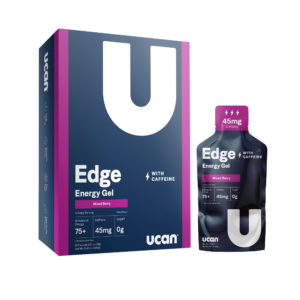
Mixed Berry EDGE is the outlier in the range. It carries 34 g of carbohydrate in one 53 g pouch with 0 g sugars, which is more carbohydrate than any other gel in the table above, alongside 45 mg of caffeine from green tea extract.
If you are chasing 90 g per hour and want fewer sachets in your belt, this is the one to test first.
If you have never raced on caffeine, do not start on race day. Take one caffeinated gel in the back half of a long run first and see how your stomach and your sleep respond. Our guide to caffeine gels for endurance covers timing and dosing in more detail.
Mistakes runners make with energy gels
Starting too late
Waiting until you feel tired, or until the 90-minute mark, puts you behind and you will not catch up. Start at 30 to 45 minutes and hold the schedule.
Taking a thick gel dry
Unless you are on an isotonic or pre-diluted gel, take it just before a water station. Two or three good mouthfuls is enough.
Trying something new on race day
The expo is full of new flavours and none of them belong in your race. A gel that suits your training partner can wreck your stomach.
Carrying one flavour
The berry gel you liked at 10km can be unbearable at 35km. Carry one fruity and one neutral, plus one more than your plan calls for.
Where to buy energy gels in Australia
UCAN EDGE ships from our Dandenong South warehouse in Victoria, dispatched the same day when you order before noon AEST. Standard delivery takes up to five business days. Choose Express at checkout and your order arrives within two business days, so a Saturday race means ordering by Wednesday.
What are the best energy gels for runners in Australia?
It depends on your gut and your conditions. Maurten Gel 100 and Precision Fuel PF 30 carry the most carbohydrate per sachet. SiS GO Isotonic goes down without water. Koda is Australian made and HASTA approved. UCAN EDGE carries no added sugar, which suits runners who struggle with sugar-based gels late in a race. Compare carbs, sugars and sodium in the table above, then test your shortlist on long runs.
How many energy gels do I need for a marathon?
Work out your hourly carbohydrate target first, then count backwards. At 60 g per hour a four-hour marathon needs around 240 g, which is eight 30 g gels, ten 25 g gels, or twelve 19 g gels. UCAN guidance for EDGE is one sachet around 30 minutes before you start, then one per hour as needed. Original EDGE carries 19 g per sachet, EDGE + Electrolyte 20 g, and Mixed Berry 34 g, so check which flavour you are carrying before you count.
Do I need water with every energy gel?
It depends on the gel. Thick, concentrated gels need two or three mouthfuls, otherwise your gut draws in fluid to dilute them and you get cramping. Isotonic gels from SiS, hydrogel gels from Maurten and UCAN EDGE are all formulated to be taken without water. Stay hydrated regardless.
Which energy gel is best for a hot or humid race?
Compare sodium per sachet rather than the electrolyte wording on the front of the pack. UCAN EDGE + Electrolyte carries 200 mg, SiS GO Energy + Electrolyte carries 118 mg, and Maurten Gel 100 carries 20 mg. None of them replaces a full litre of sweat, so pair whichever you choose with an electrolyte drink if you are out for more than two hours in humidity.
What is the difference between gels with and without caffeine?
Caffeine reduces your perception of effort, which helps in the last 10km. Doses run from 45 mg to 100 mg per sachet, so read the number rather than the label. Caffeine causes jitters and gut trouble in runners who are not used to it, so test it in training. Non-caffeinated gels do the work through the first three quarters of a race.
Can I use lollies instead of gels?
Jelly beans give you carbohydrate but no control over how much you are taking or how fast it arrives. Gels are formulated to specific carbohydrate loads, they open with one hand, and they go down without chewing at race pace.
Where can I buy UCAN energy gels in Australia?
Direct from Generation UCAN Australia at generationucan.com.au, shipped from Dandenong South in Victoria. A box of 12 EDGE is $74.90, EDGE + Electrolyte and Mixed Berry + Caffeine are $79.90, the 75 mg caffeine flavours are $84.90, and single sachets are $9.90. Standard shipping is free on orders over $220.
Formulated supplementary sports foods should not be used by children under 15 years of age or pregnant women, and should only be used under medical or dietetic supervision.
Caffeinated products are not suitable for children, pregnant or breastfeeding women, or people sensitive to caffeine. Do not exceed four sachets in 24 hours.
Generation UCAN Australia is the official Australian reseller of UCAN. EDGE energy gels are powered by LIVSTEADY, a non-GMO corn starch carbohydrate delivering 19 g to 34 g of carbohydrate per sachet with no added sugar. Stock is held in Dandenong South, Victoria and ships Australia wide.
Sports Dietitian Bob Seebohar was the personal sports dietitian for the 2008 U.S. Olympic Triathlon team and takes a cutting-edge approach to nutrition with his Metabolic Efficiency
The combination of white, pink blast, total orange and bright crimson will mark Nike's presence in Tokyo across select performance and lifestyle products.
We’re all familiar with the afternoon slump. You’re going about your day, feeling fine, but then 2 p.m. hits—and instead of thinking about a pre-dinner workout, you’re suddenly thinking about a pre-dinner nap.
Best Caffeine Gel for Endurance: How Caffeine Fuels Performance For most endurance athletes, caffeine is part of the ritual. A coffee before a morning run,...
by Sarah UCAN AUS Team1531Comments Off on Best Caffeine Gel for Endurance: How Caffeine Fuels Performance


 by Sarah UCAN AUS Team
170
Comments Off on How Sara Hall Takes Her Training to the Next Level with UCAN
by Sarah UCAN AUS Team
170
Comments Off on How Sara Hall Takes Her Training to the Next Level with UCAN 

Comments are closed