NEW: Energy Gel Berry 🇦🇺 Free shipping in Australia on orders over $220
Walk into any servo, supermarket or sports store in Australia and you’ll see two categories sitting next to each other: sports drinks and electrolyte drinks.
They look similar, they make similar promises, and most people grab whichever one is on special. But for athletes — runners, cyclists, triathletes, team-sport players, hot-weather workers — the difference matters a lot more than the marketing suggests.
This guide covers what’s actually in each, when sugar helps and when it hurts, and how to choose the right drink for the kind of training and racing you do.
Contents
The terms get used interchangeably, but the products aren’t the same. A traditional sports drink is built around two things: sugar (usually 25–35g per bottle) and sodium. The sugar is the headline ingredient — fast-absorbing carbohydrate designed to give you a quick energy hit. Sodium is added to support fluid uptake and replace what you sweat out.
Most mainstream sports drinks in Australia fall into this category. An electrolyte drink leads with minerals — sodium, potassium, magnesium and chloride — with little or no sugar. Some are pure electrolytes (often sold as tabs or low-calorie powders), and some pair electrolytes with a smarter carbohydrate source. The focus is on hydration first, energy second.
The category split usually comes down to one question: how much sugar are you drinking, and is your session long or hard enough to actually use it?
Sugar isn’t the enemy. In the right context — short, high-intensity efforts where you need fast carbs and you can’t carry food — a sugary sports drink does the job. Use cases where it makes sense: a 60–90 minute team sport match (footy, hockey, tennis) where you need quick energy between phases; a short, hard race effort where stomach tolerance for solids is low; heavy manual work in heat where you’ve burned through breakfast and need the calories. For these scenarios, the spike-and-crash isn’t really a factor — the session ends before the crash hits.
The maths changes the moment your session goes past 90 minutes.
Drinking 25–35g of sugar an hour, every hour, for three to six hours, is where sugary sports drinks start working against you: Energy spike, then drop — fast sugars trigger a sharp blood sugar response, followed by a dip.
Most experienced endurance athletes have felt the bonk that comes 20 minutes after a sugary gel or drink. Stomach load — high-osmolality sugar drinks empty more slowly from the stomach, which is why long-distance athletes often complain of bloating and nausea on race day. Sticky kit — sugar dries into a residue that gums up bidons, soft flasks and bottle valves.
Volume problem — in Australian summer heat, you might need 800ml–1L per hour. That’s 50–70g of sugar an hour. Most stomachs don’t tolerate that for long. This is the gap that sugar-free electrolyte drinks were designed to fill.

Not all electrolyte drinks are equal. Some are more or less salt water with flavouring; others are properly formulated for sport.
Here’s what to check:
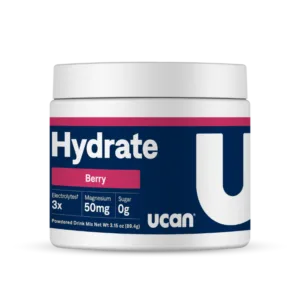
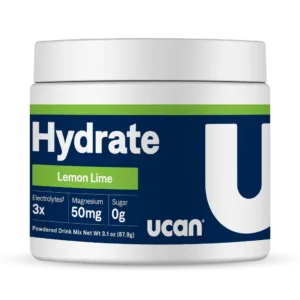
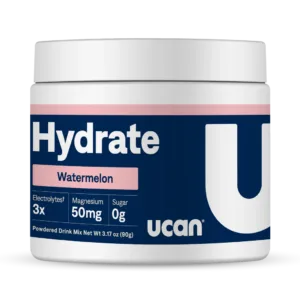
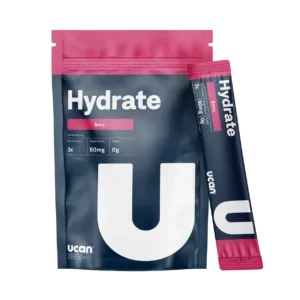
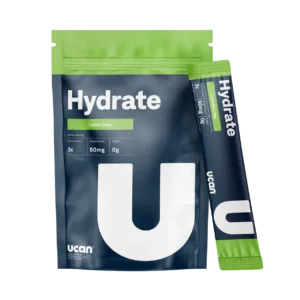
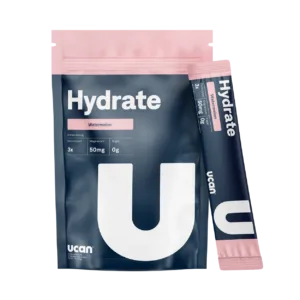
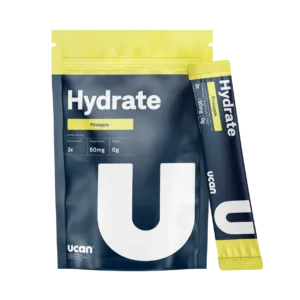
UCAN Hydrate is a sugar-free electrolyte drink designed for the gap most mainstream sports drinks miss — long, hot Australian training where you need to drink in volume without loading up on sugar.
Per serve: around 200mg sodium plus potassium, magnesium and chloride; zero added sugar; no artificial sweeteners; naturally flavoured.
Available in Berry, Lemon-Lime, Watermelon and Pineapple, in single-serve packets and 30-serve jars.
For sessions over 90 minutes where you also want amino acid support and steady-release carbohydrate in the same drink, Hydrate + Aminos adds 2g of BCAAs and 15g of LIVSTEADY slow-release carbohydrate to the same electrolyte base — built for marathons, half and full Ironman, ultras and multi-day events.
UCAN Hydrate is a sugar-free electrolyte drink designed for the gap most mainstream sports drinks miss — long, hot Australian training where you need to drink in volume without loading up on sugar.
Per serve: around 200mg sodium plus potassium, magnesium and chloride; zero added sugar; no artificial sweeteners; naturally flavoured.
Available in Berry, Lemon-Lime, Watermelon and Pineapple, in single-serve packets and 30-serve jars.
For sessions over 90 minutes where you also want amino acid support and steady-release carbohydrate in the same drink, Hydrate + Aminos adds 2g of BCAAs and 15g of LIVSTEADY slow-release carbohydrate to the same electrolyte base — built for marathons, half and full Ironman, ultras and multi-day events.
A simple, defensible hydration routine for Australian conditions:
Before the session (30–60 min out): one serve of Hydrate in 500ml of water. Top up fluids and sodium so you start on the front foot rather than playing catch-up.
During the session: sip steadily. Most athletes work in a range of 500–750ml per hour in Australian heat — more if you’re a heavy sweater, less in cooler conditions.
For sessions over 90 minutes, consider Hydrate + Aminos for the added BCAAs and slow-release carbs.
After the session: replace fluids and electrolytes lost in sweat alongside your normal recovery meal. Pair with a protein source within an hour or two of finishing.
Choose a sugary sports drink if: your session is under 90 minutes, the intensity is high, and you don’t have a problem with sugar in volume.
Choose a sugar-free electrolyte drink if: you train long, you train often, you race in heat, you’re heat-sensitive in the stomach, you don’t want the sugar load, or you’re using gels and other carb sources separately and don’t want to double-dip on sugar.
Choose Hydrate + Aminos if: your session is over 90 minutes and you want electrolytes, BCAAs and slow-release carbohydrate in one drink.
Neither is universally better — it depends on the session. Sugary sports drinks suit short, high-intensity efforts where fast carbs help. Sugar-free electrolyte drinks suit long, hot or repeated sessions where high sugar volume becomes a problem. Many endurance athletes use both at different times.
Most people don't need a sports electrolyte drink on rest days or for casual hydration — water and a balanced diet cover normal daily electrolyte needs. They earn their place around training, racing, hot-weather work, or recovery from heavy sweat sessions.
For sessions over 90 minutes, yes — most athletes find a sugar-free or low-sugar electrolyte drink easier to tolerate in volume than a high-sugar sports drink. If you also need carbohydrates for energy, the smarter approach is to add a slow-release carb source rather than load up on fast sugar.
It varies — body size, sweat rate, how salty your sweat is, temperature and effort all factor in. A working range for most athletes in Australian conditions is 300–700mg of sodium per hour during long sessions. Heavy sweaters and athletes who get white salt rings on their kit usually sit toward the higher end.
No. For most people, a 5km effort is too short to need carbs or electrolytes mid-session. Hydrate normally before, run, and rehydrate after. Save the sports drinks and electrolyte drinks for sessions where they actually do work.
Comments are closed