
No products in the cart.
By Generation UCAN Australia · Last updated: May 2026
Let’s talk straight. This dumbbell workout guide is written for endurance athletes — marathoners, triathletes and cyclists — who want practical strength that transfers to the road, trail and bike without adding unwanted bulk. The right strength work prevents late-race breakdowns. The wrong work wastes valuable training time. Below you’ll get a no-nonsense, evidence-informed plan: what to do (sets and reps), why it works (physiology and biomechanics), and how to apply it into a real Australian training week.
1. Dumbbell Goblet Squat
What it is
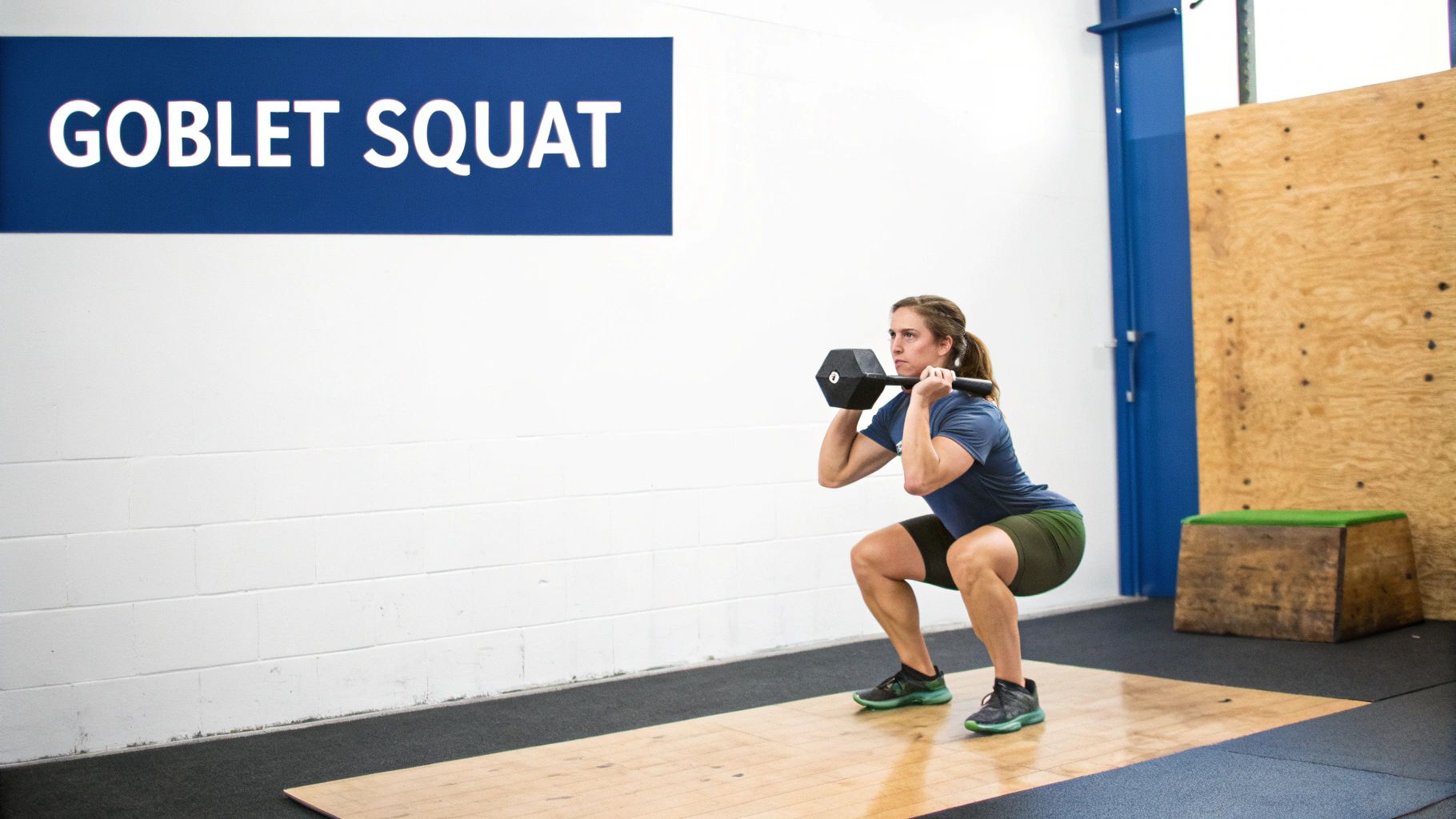
The Goblet Squat is a front-loaded squat variation where you hold one dumbbell vertically at chest height. It enforces an upright torso, teaches a clean squat pattern, and is low-risk for low-back compensation — crucial for athletes juggling big weekly running volumes.
What to do
- Warm-up: 2–3 sets bodyweight squat + dynamic hip mobility.
- Strength set (off-season / strength block): 5 sets × 6–8 reps. Rest 90–120s. Choose a weight where rep 6–7 is hard but technical.
- Maintenance set (in-season / pre-race): 3 sets × 8–10 reps. Rest 60–90s, focus on tempo (3s eccentric).
Why it works
The front-loaded position increases core and anti-flexion demand and biases the quads while still using glutes through full depth. Maintaining an upright torso improves transfer to running posture and reduces excessive lumbar shear. The goblet position encourages hip hinge into the posterior chain while preventing forward trunk collapse — a common breakdown at 30–35km in marathon races.
How to apply it
Place heavy goblet days on an easy run day or 48–72 hours after a long interval session. In a 12-week marathon block, use goblets as the primary lower-body lift for weeks 1–6 (build strength) and switch to lighter maintenance in weeks 7–12.
Key tip: Think “spread the floor” through your feet on the descent to engage glutes and protect the knees.
2. Dumbbell Romanian Deadlift (RDL)
What it is
The Dumbbell Romanian Deadlift trains the hip hinge: push the hips back, keep a soft knee bend, and load the hamstrings and glute complex. It’s the single best dumbbell movement for posterior-chain strength when done with load control and tempo focus.
What to do
- Warm-up: 2 sets RDL with empty dumbbells, 8–10 reps.
- Strength set: 4–5 sets × 5–7 reps with 2–3s eccentric — heavy but controlled.
- Accessory: 3 × 8–10 tempo RDLs or single-leg RDLs using lighter weight.
Why it works
RDLs preferentially load the hamstrings and glutes in lengthened positions — promoting eccentric strength and improved deceleration control when your stride gets long and your cadence drops. Eccentric hamstring strength reduces the risk of late-race muscular failure and common overuse injuries.1 Strength gains here show strong carryover to sprinting, cycling climbs and leg-drive efficiency.
How to apply it
Use RDLs as the cornerstone of your posterior-chain block. In a cycling-heavy build, do RDLs 48–72 hours after a long ride. In marathon prep, place them on the same day as a shorter aerobic run (easy) to allow recovery before a long interval day. If you race Ironman Cairns, emphasise RDLs in base months to build durable hamstrings for the bike-run transition.
Key tip: Keep the dumbbells close to the legs and stop when you feel a deep hamstring stretch — not when your back rounds.
3. Dumbbell Bench Press
What it is
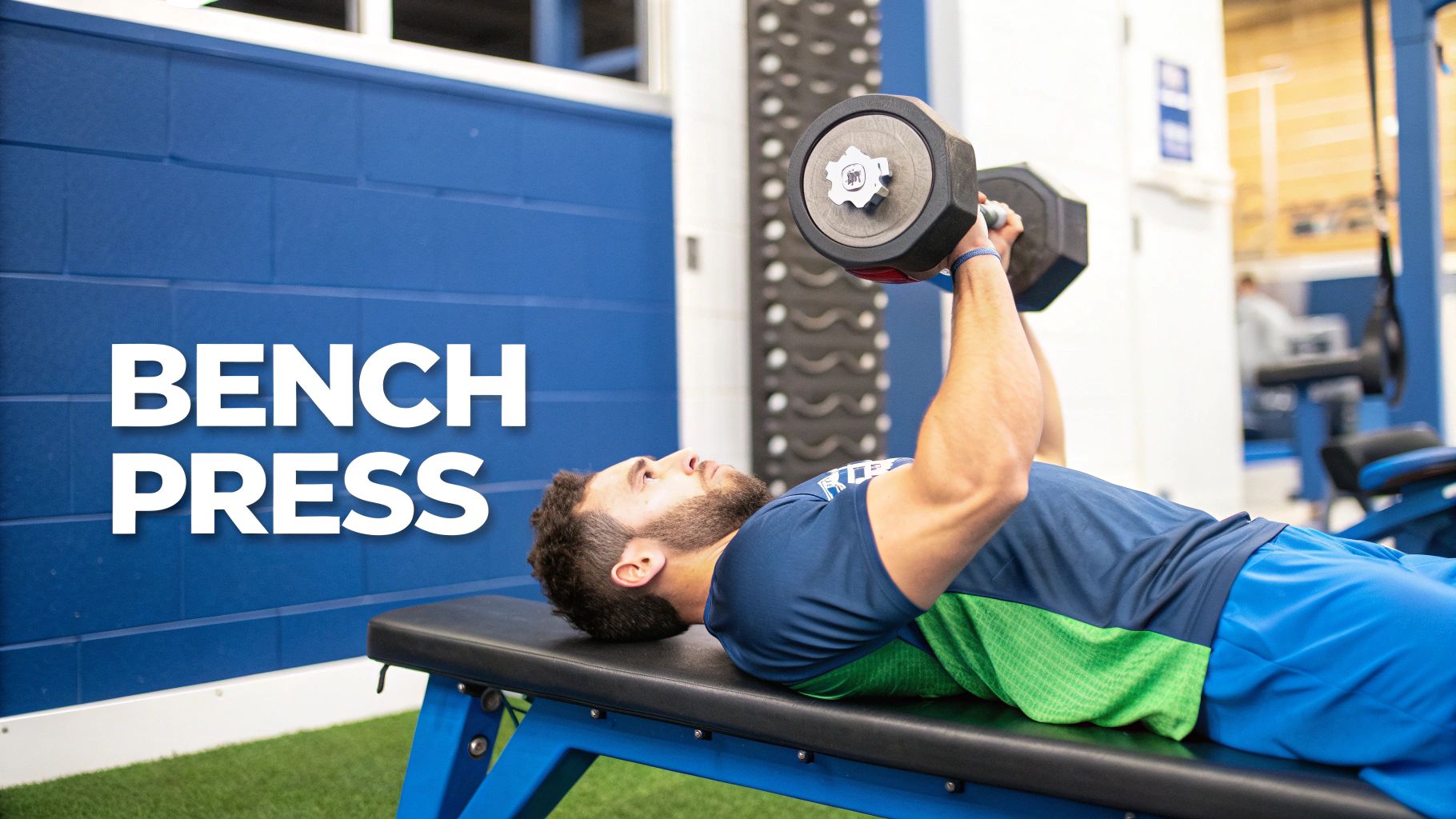
The Dumbbell Bench Press builds horizontal pressing strength and shoulder stability with unilateral control. For triathletes and swimmers, it translates directly to stronger stroke phases and better posture under fatigue.
What to do
- Warm-up: 2 sets of 10 push-ups or floor press.
- Strength: 4 sets × 6–8 reps, controlled descent, pause 1s at chest.
- Endurance/tempo: 3 sets × 10–12 reps with shorter rest for mid-season maintenance.
Why it works
Using dumbbells forces stabiliser musculature to engage and reduces unilateral dominance. This builds balanced shoulder capacity — important for long pool sets and maintaining aero position on the bike. Strong horizontal push also supports upper-body posture in later stages of a marathon.
How to apply it
Triathletes: schedule bench press on the same day as a short swim or on a dedicated strength day 48 hours before a long ride. Runners: pair it with a recovery run; keep volume lower during race week. If you have ongoing shoulder issues, substitute with neutral-grip floor presses or consult a physio.
Key tip: “Drive yourself away from the dumbbells” — cue to engage lats and upper back for a safer, stronger press.
4. Dumbbell Bent-Over Row
What it is
The Dumbbell Bent-Over Row is a horizontal pull that strengthens the lats, rhomboids and posterior deltoids — the postural muscles that keep you upright and efficient during long training blocks.
What to do
- Technique: 3 sets × 8–10 reps as warm-up focused on scapular control.
- Strength: 4 sets × 6–8 reps heavy and controlled (2s pause at the top).
- Unilateral focus: single-arm rows 3 × 8–10 for imbalances.
Why it works
Rows build horizontal pulling strength that counters the forward shoulder position developed by hours on the bike. Strong scapular retractors reduce thoracic rounding and maintain breathing mechanics, both critical in late-race scenarios where posture collapses and economy drops.
How to apply it
Use rows on the heavier strength day. For riders who spend long time in aero, increasing row strength in base months reduces shoulder fatigue and helps maintain a stronger position during time trials or Ironman efforts.
Key tip: Picture an orange between your shoulder blades — squeeze it with every rep to ensure full scapular retraction.
5. Dumbbell Shoulder Press
What it is
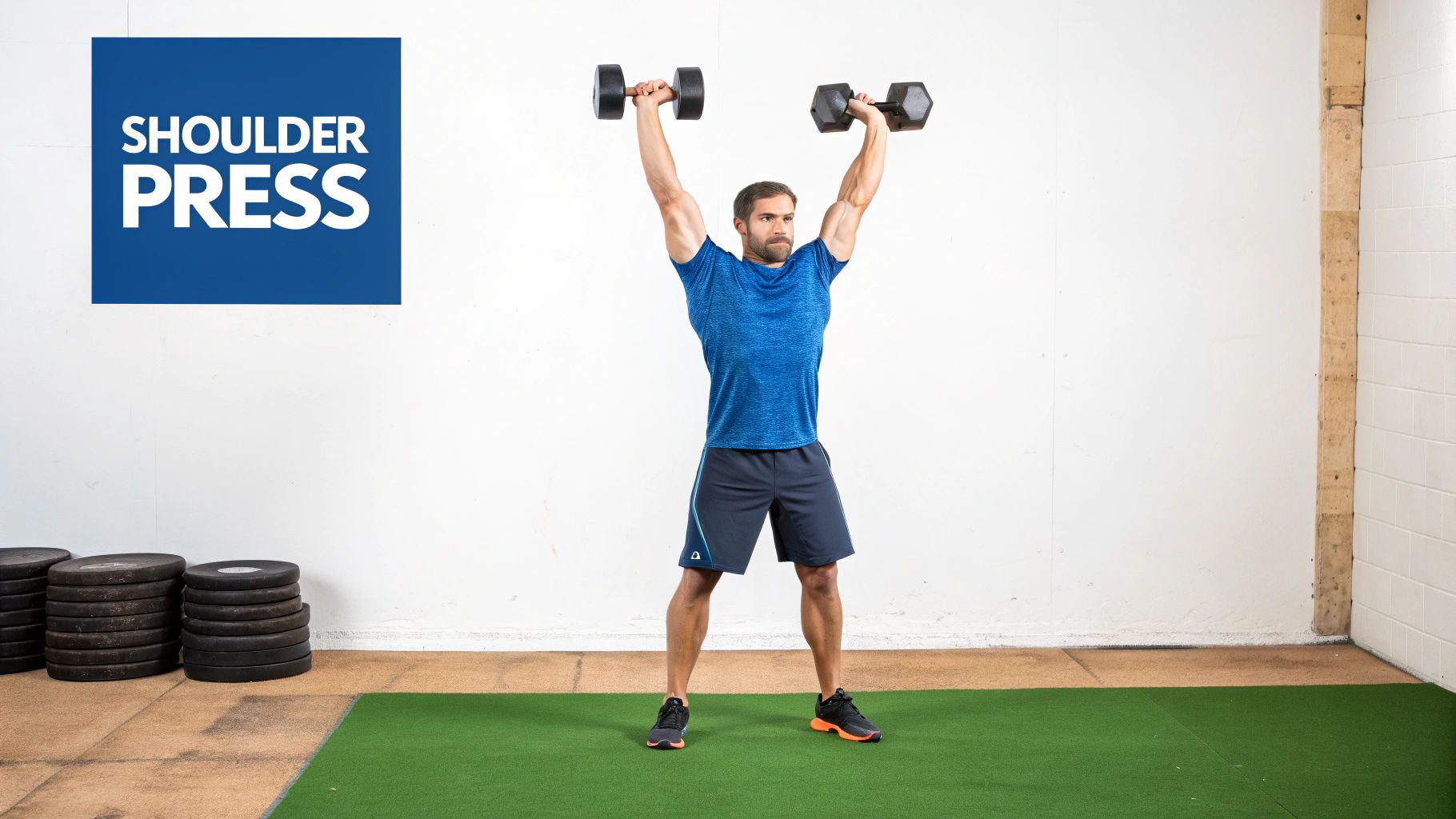
The Dumbbell Shoulder Press is the primary vertical press to build deltoid capacity and overhead stability — useful for swimmers, triathletes and those carrying equipment on long rides or hikes.
What to do
- Seated press: 4 sets × 6–8 reps (strength block).
- Standing press (stability): 3 sets × 8–10 reps with lighter weight and tempo for in-season.
Why it works
Vertical pressing recruits the core for anti-extension and challenges the shoulders across all three deltoid heads. This enhances structural resilience and reduces risk of compensatory lumbar extension (the “ego arch”) when fatigued.
How to apply it
Include shoulder presses on upper-body days and reduce load within 7–10 days of a target race that requires upper-body endurance (such as long open-water swim events). If soreness persists, swap for landmine presses or single-arm kettlebell press variations.
Key tip: Avoid over-arching — if your lower back arches, lighten the load and brace your core.
6. Dumbbell Lunges
What it is
Single-leg work like dumbbell lunges replicates the unilateral loading of running and cycling. Reverse lunges are knee-friendly and excellent for reproducible technique under load.
What to do
- Reverse lunge EMOM warm-up (10 minutes): 6 reps per leg at bodyweight.
- Strength: 4 sets × 6–8 reps per leg with dumbbells for strength block.
- Power/endurance: walking lunges 3 × 40m with lighter load during base weeks.
Why it works
Unilateral training corrects asymmetries, improves single-leg stability and targets the glute-hamstring chain required for propulsive phases in the running gait. It also reduces compensatory patterns that lead to ITB or knee pain.
How to apply it
Put lunges on the lighter strength day when doing higher running volumes; make them harder (heavier, fewer reps) during low-volume strength blocks. For marathon prep, prioritise unilateral work in base months and taper intensity mid-race block.
Key tip: “Pull” yourself up using the front leg’s hamstring and glute rather than pushing off the back foot to maximise activation.
7. Dumbbell Bicep Curl
What it is
Strict dumbbell bicep curls are an isolation move that supports grip and pull strength — useful in swimming and transitions where grip and forearm endurance matter.
What to do
- Strict curls: 3 sets × 8–12 reps (slow eccentric) for maintenance.
- Grip combo: supinated holds of 15–20s after heavy cycling sessions to simulate bar grip fatigue.
Why it works
While small in systemic load, stronger elbow flexors and forearms improve efficiency in swim pulls and reduce fatigue-related collapse in upper-body posture late in events. For cyclists, improved grip and forearm endurance helps maintain aero and control during long time-in-position efforts.
How to apply it
Keep curls to low volume in-season — high volume irritates recovery. Use them for maintenance and targeted rehab. Pair with upper-back work to maintain balanced shoulder function.
Key tip: Treat the curl as a precision movement — elbows anchored to the side, slow eccentrics.
8. Dumbbell Turkish Get-Up
What it is
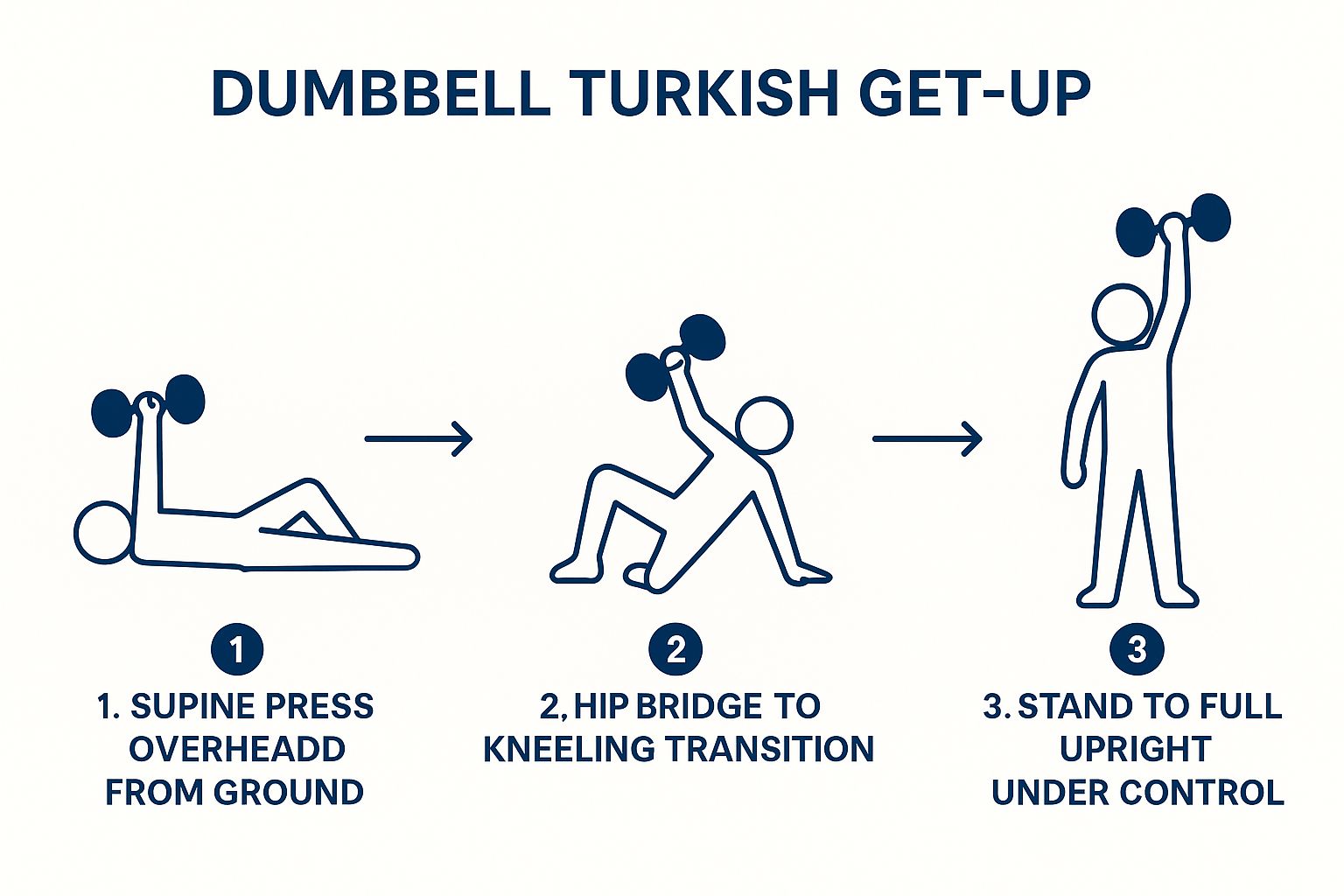
The Turkish Get-Up (TGU) is a complex, full-body movement that sequences transitions from the ground to standing while stabilising a load overhead. It builds integrated strength — shoulder stability, core control and hip mobility.
What to do
- Skill practice: 3–4 minutes of unweighted patterning (no load) at the start of the session.
- Strength: 3–4 sets × 3–5 reps per side with controlled tempo — use a moderate weight that emphasises stability not load.
- Mobility: pair with thoracic rotations and loaded carries for a complete upper-body stability block.
Why it works
TGUs train intermuscular coordination and anti-rotational control. For endurance athletes, that translates to staying upright and tension-ready in long efforts — for example, holding efficient running posture in the last 10km or maintaining a stable bike position through a long climb.
How to apply it
Use the TGU in the maintenance session — it’s tech-heavy and not heavily fatiguing. Place it in the week when you’re not racing soon (10+ days before a target A-race) and pair with mobility work to protect shoulders and hips.
Key tip: Learn the pattern without weight first — try balancing a shoe on your fist to lock the sequence in before adding load.
Top 8 Dumbbell Workouts at a Glance
| Exercise | Complexity | Primary outcome | Best use case |
|---|---|---|---|
| Goblet Squat | Low–moderate | Lower body strength, squat form | Beginners, warm-ups, all-round leg strength |
| Romanian Deadlift | Moderate | Hamstring and glute strength | Posterior chain, late-race resilience |
| Bench Press | Moderate | Chest and pressing strength | Triathletes, swim strength |
| Bent-Over Row | Moderate | Upper back strength, posture | Cyclists, posture correction |
| Shoulder Press | Moderate | Shoulder strength, core stability | Swimmers, functional upper body |
| Lunges | Moderate | Single-leg strength and balance | Running, asymmetry correction |
| Bicep Curl | Low | Arm and grip strength | Maintenance, grip endurance |
| Turkish Get-Up | High | Full-body stability and mobility | Advanced, integrated control |
How to Fuel Your Strength Work for Endurance Gains
Doing the dumbbell workout is only half the job — how you fuel before and refuel after is what locks in the adaptation. For targeted strength sessions (45–60 minutes) you want steady, available energy without spikes that cause crashes mid-session.
What to do (and when)
- 30–45 minutes before: Take a steady-release carbohydrate like a UCAN Edge Energy Gel to top up available energy without a sugar spike.
- Post-session (within 30–60 minutes): UCAN Energy + Protein delivers a 3:1 carb-to-protein ratio to accelerate glycogen resynthesis and muscle repair.
- Hydration and electrolytes: If sessions are back-to-back or done in hot, humid conditions (think Brisbane or Cairns summer), add UCAN Hydrate to reduce cramping risk and support recovery.
Why it works
LIVSTEADY™ slow-release carbs offer sustained blood glucose delivery, which helps you keep consistent power across reps and sets. That means better quality reps, more effective stimulus, and less CNS fatigue. Post-session carbs plus protein drive the acute anabolic window and improve muscle protein synthesis after a strength bout.2
How to apply it
Example: on a Tuesday morning strength session (heavy), take one UCAN Edge Energy Gel 30 minutes prior with 200–300ml water. After the session, have UCAN Energy + Protein within 45 minutes to top up and begin repair. For long-heat sessions, add an electrolyte product mid-session.
Frequently Asked Questions
How often should an endurance athlete do these dumbbell workouts?
Twice a week is the sweet spot for most endurance athletes. One session focused on strength (4–6 sets of heavier compound moves) and one session for maintenance, stability and speed (3–4 sets, higher tempo). Schedule them on easier weeks or conservative days — ideally 48–72 hours away from hard intervals.
What weight should I use for these dumbbell exercises?
Start lighter than you think. The aim is perfect technique. For strength blocks, pick a load that leaves you 1–2 reps shy of failure on the final set. In maintenance weeks, drop weight and focus on tempo, not load.
Will lifting weights make me bulky and slow?
No. These protocols produce lean strength and resilience. Bulk requires chronic hypertrophy training and a caloric surplus. The benefit for endurance athletes is improved running economy, injury resistance, and late-race power.
Can I do these workouts at home?
Yes. All eight moves work with basic adjustable dumbbells and a small footprint. The only additional useful item is a bench for the bench press. If you don’t have a bench, floor press or neutral-grip press are suitable substitutes.
What should I eat after a strength session?
Within 30–60 minutes of finishing, take 20–25g of high-quality protein paired with carbohydrate. A purpose-built recovery shake like UCAN Energy + Protein delivers this in one drink, particularly useful when stomach tolerance is low after a hard session.
The Bottom Line
A focused, twice-weekly dumbbell workout routine — prioritising goblet squats, RDLs, lunges and the Turkish Get-Up — will build the specific strength endurance you need for Australian races like the Gold Coast Marathon, Sydney Marathon, and Ironman Cairns. Keep sessions simple, progressive, and well-fuelled: heavy and light weekly structure, targeted unilateral work, and UCAN pre and post-fuelling for consistent session quality and recovery.
References
- McAllister, M. J., et al. (2014). Muscle activation during various hamstring exercises. Journal of Strength and Conditioning Research, 28(6), 1573–1580.
- Jäger, R., et al. (2017). International Society of Sports Nutrition Position Stand: protein and exercise. Journal of the International Society of Sports Nutrition. PubMed Central.
- Schoenfeld, B. J. (2010). The mechanisms of muscle hypertrophy and their application to resistance training. Journal of Strength & Conditioning Research.
- Pereira, R. M., et al. (2018). Effects of eccentric hamstring strengthening on sprint and jump performance: a systematic review. Sports Medicine.

 by
by 

Comments are closed