📦 Energy Gel EDGE Watermelon + Caffeine back in stock | 🇦🇺 Free shipping in Australia over 220 AUD
$0.00
0
How Many Calories Are in Electrolyte Drinks?
The calories in electrolytes are not where most people assume. The minerals themselves carry none at all. Sodium, chloride, potassium, magnesium and calcium are mineral salts, and your body does not burn them for energy. So when an electrolyte drink shows a number on the energy line, that number came from something else in the tin.
Which is why the answer to how many calories are in electrolytes ranges from zero to about 120, depending entirely on what the manufacturer added alongside the minerals. Two products sitting next to each other on the same shelf can differ by the whole of that range.
This guide covers where the calories in electrolytes actually come from, what the typical figures are by product type, and how to read an Australian label that declares kilojoules when you are thinking in calories.
The short version
A sugar free electrolyte powder carries 0 kilojoules per serve. A carbohydrate sports drink carries 400 to 500 kilojoules per 500ml, which is roughly 95 to 120 calories. Oral rehydration salts sit between the two at 60 to 110 kilojoules. The minerals are never the source. Every kilojoule in an electrolyte drink comes from carbohydrate, protein, amino acids or sugar alcohols.
Electrolytes themselves contain zero calories. A finished electrolyte drink contains anywhere from 0 to about 120 calories per serve, which is 0 to roughly 500 kilojoules, depending on whether the product also carries carbohydrate, protein or sugar alcohols.
The spread is that wide because the category covers two very different jobs. Some products are trying to replace fluid and minerals and nothing else. Others are trying to be your hydration and your fuel in the same bottle. Both are legitimate. They just belong to different moments.
Minerals alone
0kJ
Sodium, chloride, potassium, magnesium and calcium carry no energy at all
With carbohydrate added
up to 500kJ
Per 500ml of a standard carbohydrate sports drink, roughly 120 calories
Why the minerals themselves carry no calories
Energy in food comes from three macronutrients and a handful of minor contributors. Carbohydrate and protein each supply roughly 17 kilojoules per gram, fat about 37, alcohol about 29, and sugar alcohols somewhere around 10 depending on which one it is.
Minerals are not on that list. Sodium citrate, potassium citrate, magnesium phosphate, tricalcium phosphate and sodium chloride are all salts. Your body uses them to regulate fluid balance and nerve signalling, not as fuel. They pass through the energy calculation entirely.
This is the whole reason a zero energy electrolyte drink is possible in the first place. Take the minerals, add an intense sweetener that also carries no energy, and you have a drink that replaces what sweat removed without contributing anything to your daily intake. That is not a marketing trick, it is just what mineral salts are.
Where the calories in electrolytes actually come from
If the panel shows a number, one of these five is responsible.
Source
Energy per gram
Why it is in there
Sugars
17kJ
Glucose, dextrose, sucrose or fruit sugars. Fuel, flavour, and in rehydration formulas a way to help sodium and water move together.
Maltodextrin
17kJ
A carbohydrate that is not a sugar, so it carries energy without showing on the sugars line. This is how a product can be sugar free and still have calories.
Protein and amino acids
17kJ
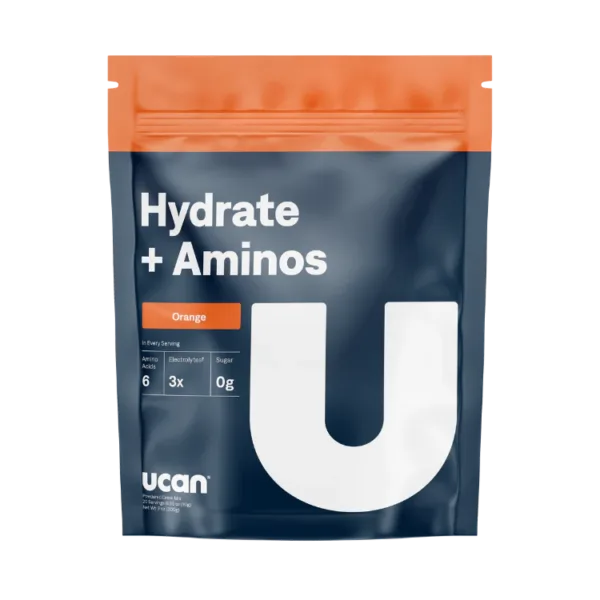
Common in hydration products aimed at longer sessions. A gram or two of aminos puts a small number on the energy line.
Sugar alcohols
about 10kJ
Erythritol, xylitol, sorbitol, maltitol. Used as bulk sweeteners, so they appear in gram quantities rather than milligrams.
Intense sweeteners
effectively 0kJ
Stevia, sucralose, acesulfame potassium. Used in milligram quantities and contribute nothing measurable to the energy line.
The practical shortcut: look at the carbohydrate line and the protein line together. If both read zero, the energy line will read zero too, whatever the front of the pack claims. If either is above zero, that is where your calories are.
Calories in electrolytes, by product type
Knowing which category you are holding predicts the number before you turn the tin around.
Product type
Kilojoules
Calories
Why
Sugar free electrolyte powder
0kJ
0
Mineral salts and an intense sweetener. Nothing that carries energy.
Electrolyte tablets
0 to 40kJ
0 to 10
Some use a small amount of dextrose or sorbitol as a binder or bulking agent.
Hydration with amino acids
30 to 60kJ
7 to 15
A gram or two of amino acids at 17 kilojoules per gram.
Oral rehydration salts
60 to 110kJ
15 to 26
Glucose is included on purpose, to help the gut take up sodium and water.
Carbohydrate sports drink, 500ml
400 to 500kJ
95 to 120
25 to 30 grams of sugar, because the drink is meant to be your fuel as well.
Figures are typical of each category rather than of any single brand. Always check the panel on the product in your hand.
Kilojoules or calories on an Australian label
Australian nutrition information panels declare energy in kilojoules. Calories may appear alongside, but they are optional, and plenty of products leave them off entirely. If you think in calories, you will often be doing the conversion yourself.
One calorie is 4.184 kilojoules. In practice, divide the kilojoule figure by four and you are close enough for anything you are doing in a supermarket aisle.
If the panel says
That is roughly
Typical of
0kJ
0 calories
Sugar free electrolyte powder
40kJ
10 calories
A tablet with a small bulking agent
100kJ
24 calories
Oral rehydration salts
450kJ
108 calories
500ml of a carbohydrate sports drink
Mineral salts and stevia. Nothing on the energy line, because nothing in the tin carries any.
Do the calories in electrolytes actually matter?
It depends entirely on what job the bottle is doing, and for most people it comes down to one question: where is your carbohydrate coming from?
When the calories are the point
If the drink is your only fuel source, you want the energy. On a long ride with no gels and no food, 450 kilojoules in a bottle is 450 kilojoules you do not have to carry another way. The same applies to oral rehydration formulas, where the glucose is not there for calories but because it helps the gut absorb sodium and water together.
When the calories get in the way
If you are already taking gels, chews or an energy powder, the carbohydrate in your bottle is carbohydrate you did not plan for and cannot easily measure. Most endurance athletes have a target range for carbohydrate per hour. A sports drink quietly adds 25 to 30 grams to that figure every time you refill, which is roughly the same as a whole gel.
When you are drinking it off the bike
A lot of electrolyte use happens on rest days, in heat, on a long flight or simply because plain water is dull. If that is you, the energy line matters more than it does in training, because you are drinking it without the session that would use it.
"I add this product to my sparkling water and I feel like I'm drinking a flavor instead of having a soda with the calories."
Donna D. · verified buyer on ucan.co · Watermelon Hydrate
How to find a genuinely zero energy option
Four checks, in this order, and none of them involve reading the front of the pack.
Energy, per serving column. This is the answer. If it reads 0kJ, you are done.
Carbohydrate, per serving. Zero here means no sugars and no maltodextrin.
Protein, per serving. Above zero means added aminos or protein, which carry energy.
The ingredient list. If erythritol or xylitol appears near the top, the product uses a bulk sweetener rather than an intense one, and there will be energy on the panel.
The electrolytes themselves do not. Sodium, chloride, potassium, magnesium and calcium are mineral salts, and the body does not metabolise them for energy. Any calories on an electrolyte drink label come from something else that was added, usually carbohydrate, protein or a sugar alcohol.
How many calories are in an electrolyte drink?
Between zero and about 120 per serve. A sugar free powder is 0 kilojoules. A tablet is typically 0 to 40 kilojoules. Oral rehydration salts run 60 to 110. A 500ml carbohydrate sports drink is 400 to 500 kilojoules, or roughly 95 to 120 calories.
How do I convert kilojoules to calories?
Divide by 4.184, or just divide by four for a quick estimate. 100 kilojoules is about 24 calories. 450 kilojoules is about 108. Australian labels declare kilojoules by default and calories only optionally, so you will often be doing this conversion yourself.
Can a sugar free electrolyte drink still have calories?
Yes, and this catches people out. Maltodextrin is a carbohydrate but not a sugar, so it carries energy without appearing on the sugars line. The same is true of added protein, amino acids and sugar alcohols. Read the energy line rather than the sugar claim.
Do electrolyte tablets have calories?
Usually very few, somewhere between 0 and 40 kilojoules depending on the brand. Tablets often use a small quantity of dextrose or sorbitol as a binder, which puts a number on the energy line without making the product a meaningful source of fuel.
Are zero calorie electrolytes worse than ones with calories?
Not for hydration. The minerals do that job and they are the same either way. Calories matter when the drink is also your fuel, or in an oral rehydration formula where glucose helps sodium and water move together. If your carbohydrate is coming from gels or a powder, a zero energy drink does the hydration job without adding fuel you did not plan.
Are electrolyte calories counted differently to food calories?
No. A kilojoule is a kilojoule wherever it comes from. What changes is the source. In most foods the energy comes from carbohydrate, protein and fat. In an electrolyte drink it comes from whatever was added alongside the minerals, which is why the figure can legitimately be zero.
Why does my electrolyte powder show 0kJ but list carbohydrate?
Rounding. Australian labelling allows small quantities to round to zero, so a product with a fraction of a gram of carbohydrate can legitimately declare 0kJ. At the quantities involved it makes no practical difference to a training day.
Energy conversion factors are those used in the Australia New Zealand Food Standards Code. Category figures are typical of each product type rather than of any single brand, taken from published nutrition information panels, correct as at September 2026. Guidance here is general and not individual advice.
Sports Dietitian Bob Seebohar was the personal sports dietitian for the 2008 U.S. Olympic Triathlon team and takes a cutting-edge approach to nutrition with his Metabolic Efficiency
The combination of white, pink blast, total orange and bright crimson will mark Nike's presence in Tokyo across select performance and lifestyle products.
We’re all familiar with the afternoon slump. You’re going about your day, feeling fine, but then 2 p.m. hits—and instead of thinking about a pre-dinner workout, you’re suddenly thinking about a pre-dinner nap.
Best Caffeine Gel for Endurance: How Caffeine Fuels Performance For most endurance athletes, caffeine is part of the ritual. A coffee before a morning run,...
by Sarah UCAN AUS Team1535Comments Off on Best Caffeine Gel for Endurance: How Caffeine Fuels Performance




 by Sarah UCAN AUS Team
170
Comments Off on How Sara Hall Takes Her Training to the Next Level with UCAN
by Sarah UCAN AUS Team
170
Comments Off on How Sara Hall Takes Her Training to the Next Level with UCAN 

Comments are closed